The Best Fluffy Pancakes recipe you will fall in love with. Full of tips and tricks to help you make the best pancakes.

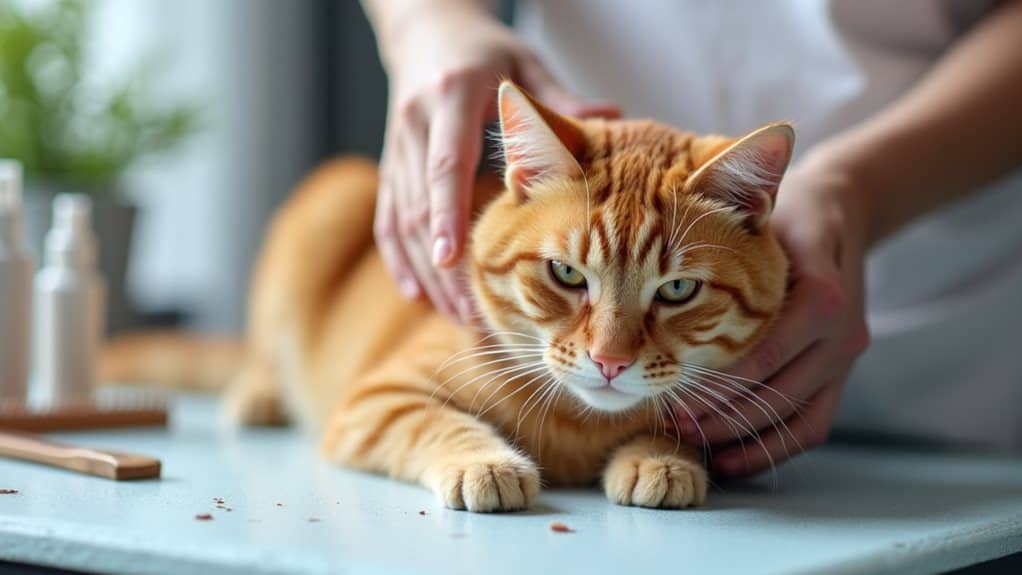
Prevent matted cat fur with regular brushing using slicker brushes for long-haired cats or rubber mitts for short-haired breeds. For existing mats, try gentle fingertip detangling on minor knots and use wide-toothed combs for larger tangles. Never cut close to the skin—seek professional help for severe matting. Keep sessions positive with treats and praise. Matting isn’t just unsightly; it can cause skin infections and restrict movement when left untreated. The rest of this guide explores advanced techniques for healthier, happier cats.
Understanding Why Cats Develop Mats in Their Fur
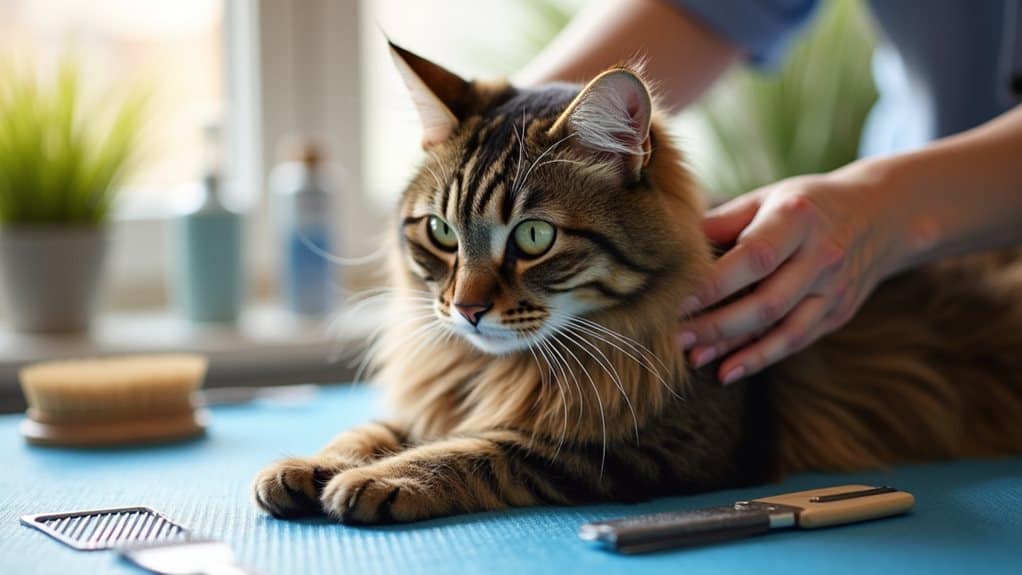
When your fluffy feline friend starts developing mats in their fur, it can be both puzzling and concerning. These tangled clumps form when loose hairs intertwine with attached fur, creating knots that tighten over time.
Your cat’s feline grooming habits play an essential role here—cats with decreased grooming due to age, obesity, or illness are more susceptible to matting.
Coat texture variations also contribute considerably. Long-haired breeds like Persians and Maine Coons naturally experience more matting than their short-haired counterparts.
Areas with friction—under the collar, behind ears, armpits, and between back legs—are mat hotspots. Environmental factors matter too! Humidity can make fur stickier, while static electricity in dry conditions attracts loose hairs together.
Even your sweet kitty’s lifestyle affects matting—outdoor adventurers collect more debris that leads to knots. Regular grooming with essential grooming tools can help mitigate the risk of matting.
Health Risks Associated With Matted Cat Fur
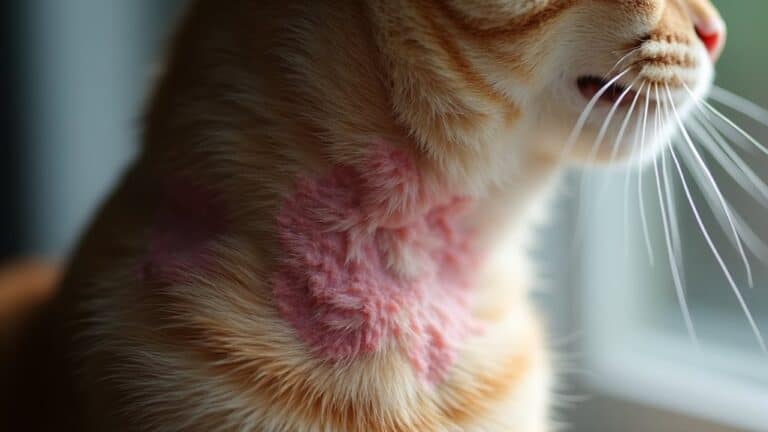
When your cat’s fur becomes matted, it’s not merely an aesthetic issue but a serious health concern that can lead to painful skin infections beneath the tangled hair.
Your furry friend might struggle with basic movements as severe mats near joints can restrict their natural flexibility and cause discomfort with every step.
You’ll need to address these mats promptly, as the longer they remain, the more your cat risks developing these health complications that affect both their physical wellbeing and quality of life. Regular grooming can help prevent skin problems by removing loose hair and distributing natural oils, ultimately reducing the risk of mats forming.
Skin Infections
Several severe skin infections can develop underneath your cat’s matted fur, creating a painful and dangerous situation for your feline friend.
Trapped moisture and debris become a perfect breeding ground for bacteria and fungi, leading to hot spots, abscesses, and dermatitis that compromise your cat’s skin health.
You’ll notice your cat scratching excessively, showing signs of discomfort, or even developing an unpleasant odor from the infected area.
In advanced cases, these infections can spread throughout your cat’s body, potentially causing fever and lethargy.
Infection prevention starts with regular grooming and immediate attention to any mats that form. Regular grooming practices help maintain a cat’s coat and promote skin health, reducing the likelihood of infections.
Don’t let small tangles progress into dangerous mats.
Movement Restrictions
Matted fur can severely limit your cat’s range of motion, acting like a painful straightjacket that restricts natural movement. When your feline friend suffers from matted fur, their cat mobility becomes compromised in multiple ways.
Here’s how matted movement affects your cat:
- Joints become less flexible, making jumping and climbing difficult or impossible.
- Walking becomes uncomfortable, causing your cat to limp or move awkwardly.
- Grooming becomes challenging, creating a cycle where mats worsen because they can’t reach affected areas.
- Playtime activities decrease, leading to weight gain and muscle atrophy.
You’ll notice your once-agile companion moving differently, perhaps avoiding favorite activities altogether.
This reduced mobility isn’t just physically limiting—it affects their mental well-being too. Cats naturally love stretching and moving freely, so matted fur fundamentally traps them in their own bodies. Additionally, excessive grooming can exacerbate the problem and lead to more mats forming in hard-to-reach spots.
Essential Grooming Tools for Mat Prevention
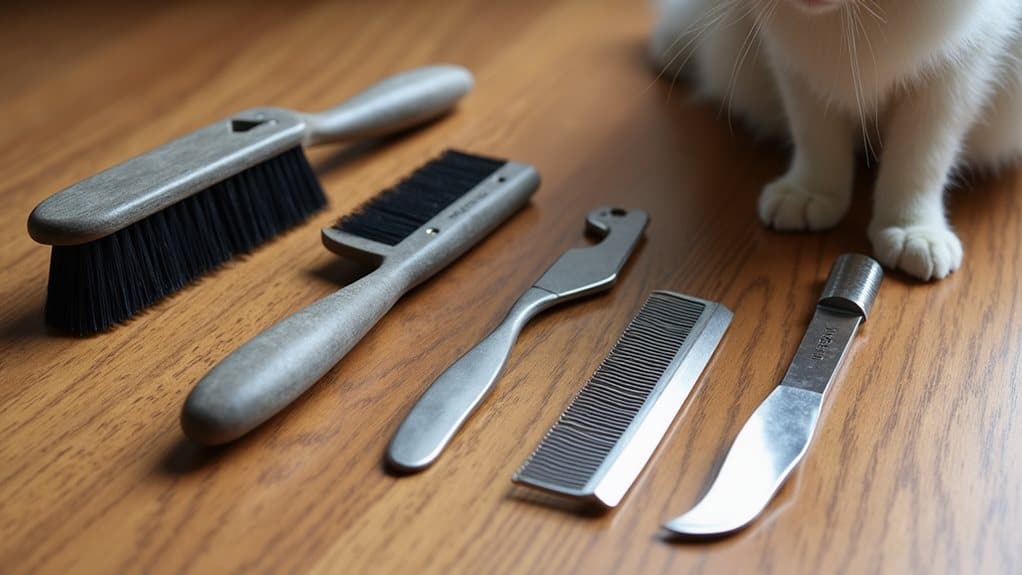
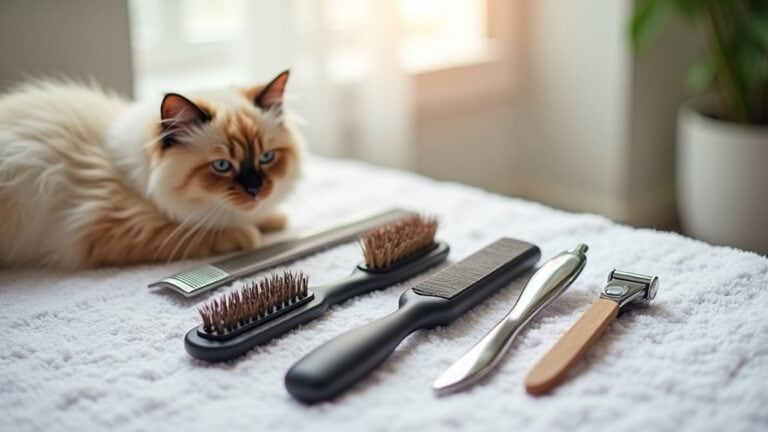
Three key tools form the foundation of any effective cat grooming routine to prevent those pesky mats from forming in your feline friend’s fur. Based on your cat’s fur type, you’ll need to adjust your grooming frequency and select the right tools for best results.
| Tool Type | Best For | How Often to Use |
|---|---|---|
| Slicker Brush | Long-haired cats | 3-4 times weekly |
| Metal Comb | Detecting hidden mats | 1-2 times weekly |
| De-shedding Tool | Seasonal shedding | Monthly |
| Detangling Spray | Stubborn knots | As needed |
| Rubber Grooming Mitt | Short-haired cats | 1-2 times weekly |
Don’t wait until you spot a mat to start grooming! Regular brushing removes loose fur and distributes natural oils through your cat’s coat, preventing tangles before they start. Additionally, regular grooming helps to enhance the overall health and wellbeing of your cat.
Establishing a Regular Brushing Routine
To keep your cat’s coat tangle-free, you’ll need to select brushes that match your pet’s fur type, whether that’s a slicker brush for long-haired breeds or a soft bristle brush for shorter coats.
Setting up consistent brushing times, like after your cat’s evening meal when they’re relaxed, will help make grooming a natural part of your routine.
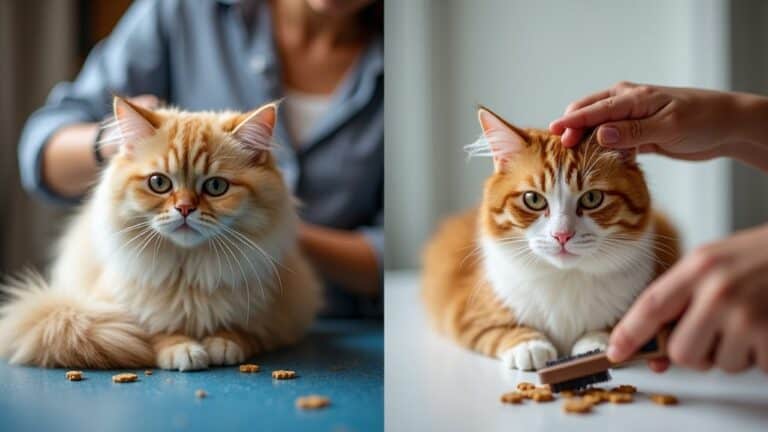
You can transform brushing from a chore into a bonding experience by offering treats, speaking in soothing tones, and keeping sessions brief at first, gradually extending the time as your cat becomes more comfortable. Regular grooming not only prevents matting but also enhances overall hygiene, contributing to your cat’s health and well-being.
Choose the Right Brush
Selecting the perfect brush for your cat’s coat isn’t just about convenience—it’s vital for preventing those troublesome mats from forming in the first place.
Different coat types require specific brush types, and using the wrong tool can actually damage your cat’s fur or skin.
For best results, consider these key options:
- Slicker brushes – Perfect for medium to long-haired cats, these remove loose fur and prevent tangles.
- Metal combs – Excellent for detangling early-stage mats without pulling the skin.
- De-shedding tools – Reduce loose undercoat fur during heavy shedding seasons.
- Rubber grooming mitts – Gentle options for short-haired cats or those who fear traditional brushes.
By understanding feline behavior dynamics, you can tailor your grooming approach to ensure your cat feels secure and comfortable during brushing sessions.
Schedule Brushing Sessions
Establishing a regular brushing schedule represents one of the most effective ways to prevent those troublesome mats from forming in your cat’s fur.
You’ll want to create consistent grooming schedules based on your cat’s specific needs. Long-haired breeds like Persians or Maine Coons benefit from daily brushing, while short-haired cats might only need it twice weekly.
The trick is finding the right brushing frequency that works for both you and your feline friend.
Try connecting brushing sessions to your regular routine—perhaps while watching your evening show or after feeding time when your cat is content.
Consistency is key! Even short, frequent sessions are more effective than occasional marathon grooming battles. Regular grooming strengthens bond and helps keep their coat healthy.
Your kitty will eventually come to expect (and maybe even enjoy!) these special bonding moments that keep their coat healthy.
Make Grooming Enjoyable
Now that you’ve set a consistent brushing schedule, let’s focus on making these sessions something your cat actually looks forward to! Many cats can learn to enjoy grooming with the right approach and plenty of positive reinforcement.
Here’s how to create a pleasant grooming experience:
- Start with a calm environment – choose a quiet time when your cat is already relaxed, perhaps after a meal when they’re feeling content.
- Use grooming rewards like their favorite treats during and after brushing sessions to create positive associations.
- Keep sessions short at first (5-10 minutes) and gradually extend them as your cat becomes more comfortable.
- Incorporate gentle praise, pets, and soothing words throughout – your calm voice works wonders as positive reinforcement.
- It’s also beneficial to introduce grooming gradually to help your cat feel more comfortable with the process.
Your patience will pay off when grooming transforms from a battle into bonding time!
Nutrition’s Role in Maintaining Healthy Coat
While brushing and grooming are vital, your cat’s diet directly impacts the health and shine of their fur. A balanced diet rich in omega-3 and omega-6 fatty acids promotes coat hydration and reduces shedding.
Nutrition fuels feline beauty from the inside out, with essential fatty acids being your secret weapon against dull fur.
You’ll notice the difference when your cat’s fur becomes softer and more manageable within weeks of dietary improvements.
Consider adding dietary supplements specifically formulated for feline coat health if your cat’s regular food lacks key nutrients. Fish oil supplements can work wonders for dry, prone-to-matting fur.
Always consult your vet before introducing new supplements to verify they’re appropriate for your cat’s specific needs.
Don’t forget about water intake! Proper hydration contributes to skin elasticity and coat health. Fresh, clean water should always be available to keep your furry friend’s coat looking its best. Additionally, a balanced diet is essential for overall wellbeing, ensuring your cat maintains a vibrant coat and healthy skin.
Gentle Techniques for Removing Minor Mats
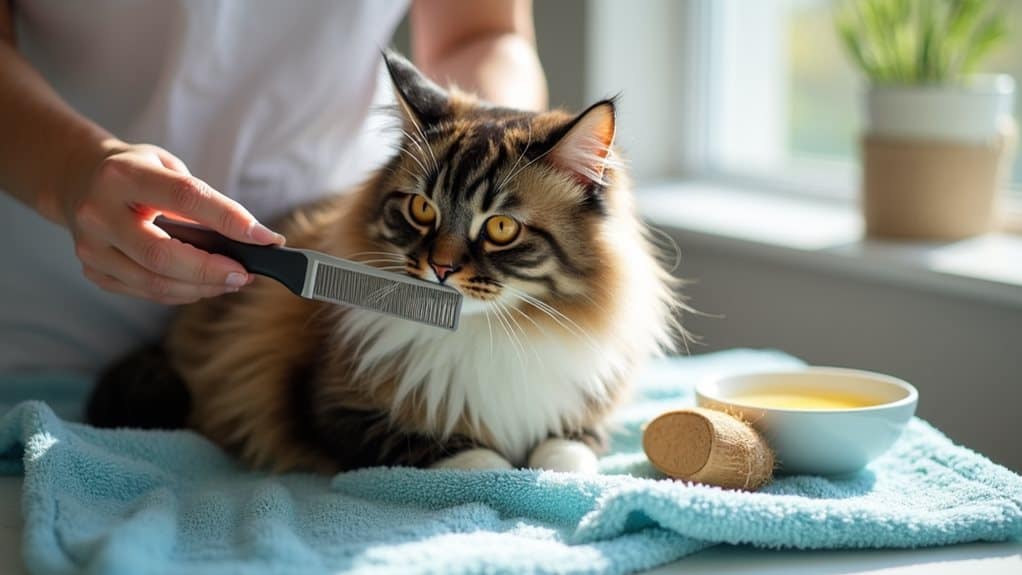
When your cat has minor mats in their fur, you’ll want to start with the gentle fingertip detangling method, which involves carefully working through tangles using just your fingers.
You’ll find special mat tools, like wide-toothed combs and mat splitters, extremely helpful for breaking up small mats without hurting your kitty.
Remember to work slowly and reward your cat with treats during the process, making mat removal a more positive experience for both of you.
Fingertip Detangling Method
Gently working through your cat’s minor mats can save both of you from the stress of more invasive grooming techniques. The fingertip detangling method relies on your finger sensitivity to feel the mat’s structure and work through it carefully.
You’ll need patience, but your cat will appreciate this gentle approach.
Follow these steps for effective detangling:
- Position your cat comfortably on your lap or a familiar surface.
- Separate the matted section from surrounding fur with your fingers.
- Use your fingertips to gently pull apart the outer edges of the mat.
- Work inward gradually, applying detangling techniques like “divide and conquer.”
Remember to reward your kitty with treats and praise throughout the process. This builds positive associations with grooming and strengthens your bond.
Special Mat Tools
The right tools can make all the difference when tackling your cat’s stubborn mats. When your fingers aren’t enough, specialized matted fur tools come to the rescue. These grooming tool types are designed to gently separate and remove mats without hurting your feline friend.
| Tool Type | Best For | Usage Tip |
|---|---|---|
| Mat Comb | Surface mats | Work from edges inward |
| Mat Splitter | Deep, tight mats | Cut through mat base carefully |
| Slicker Brush | Prevention | Use weekly for maintenance |
You’ll want to introduce these tools slowly to your cat. Let them sniff and inspect before you begin grooming. Remember, patience is key! Short, positive sessions will help your cat associate these tools with pleasant experiences rather than stress. Your kitty’s coat will thank you!
When to Use Clippers vs. Scissors for Severe Mats
Deciding between clippers and scissors can make all the difference when tackling your cat’s severe fur mats. Your choice doesn’t just affect efficiency—it impacts your cat’s comfort and safety too.
Choosing the right tool for your cat’s mats affects both grooming success and your pet’s wellbeing.
Consider these factors when making your decision:
- Location matters – Use clippers for large areas and body mats, while scissors work better for small facial mats where clipper safety is a concern.
- Mat severity – Clippers handle dense, tight mats better than scissor techniques can manage.
- Your cat’s temperament – Nervous cats might do better with quiet scissors than buzzing clippers.
- Your skill level – Scissors require more precision and carry higher risk of nicks, while clippers offer a safety guard.
Special Considerations for Senior and Obese Cats
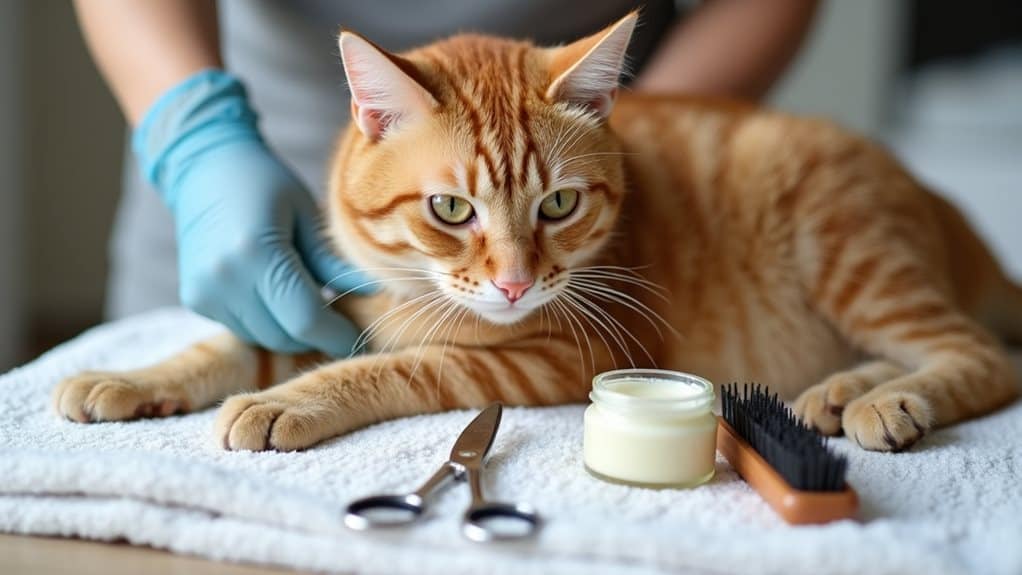
Senior and obese cats face unique challenges when it comes to matting, requiring customized approaches beyond standard grooming techniques.
These feline friends often struggle with mobility issues that prevent them from reaching all areas during self-grooming, particularly their lower back and hindquarters.
When helping your senior or overweight cat, remember that their skin is often more delicate and prone to tearing. You’ll want to use gentler tools and take more frequent, shorter grooming sessions to reduce stress.
Consider using specialized grooming aids like longer-handled brushes that help address grooming challenges while minimizing discomfort.
A comfortable position is essential—try placing a non-slip mat on a low surface rather than lifting them to counter height.
Always reward their patience with treats and praise, creating positive associations with grooming time despite their physical limitations.
Post-Mat Removal Skin Care and Monitoring
After removing mats from your cat’s fur, proper skin care becomes essential to prevent irritation and promote healing.
Your kitty’s skin may be sensitive or even damaged after mat removal, requiring your gentle attention and careful monitoring.
Follow these four steps for effective post-mat skin care:
- Apply a pet-safe moisturizer to improve skin hydration where mats were removed.
- Check the area daily for redness, scabs, or signs of infection.
- Continue regular mat monitoring by running your fingers through fur every 2-3 days.
- Use a soft-bristled brush for gentle maintenance, avoiding aggressive grooming on tender areas.
If you notice persistent irritation or unusual behavior, consult your vet.
Most cats bounce back quickly with proper care, and you’ll soon have a happier, more comfortable feline friend enjoying their mat-free coat!
When to Seek Professional Grooming Assistance
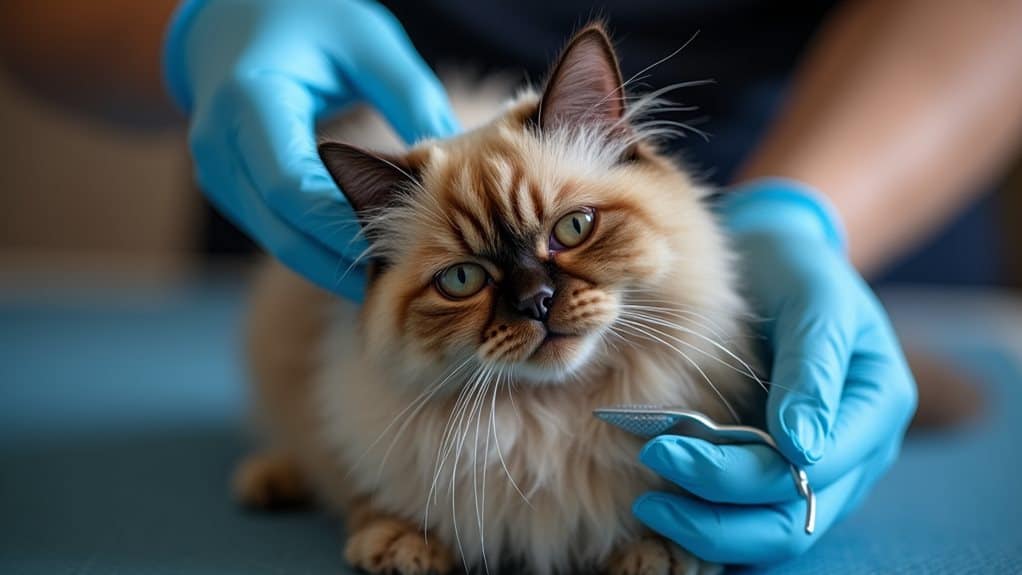
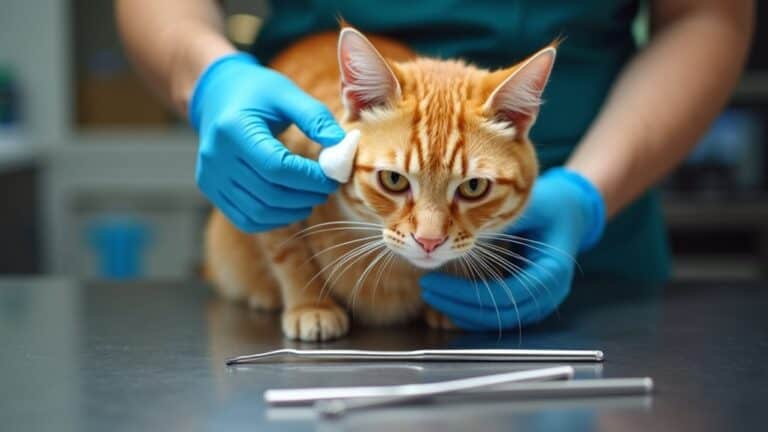
While many cat owners can handle routine grooming at home, recognizing when to call in a professional groomer is crucial for your cat’s health and comfort.
If your cat’s fur has severe matting that’s close to the skin or covers large areas, it’s time for expert help. These situations often stem from insufficient grooming frequency or underlying matting causes like obesity or arthritis.
You’ll also want professional assistance when your cat becomes extremely stressed during home grooming attempts or if you notice skin issues beneath the mats.
Professional groomers have specialized tools and techniques that can safely address difficult cases without traumatizing your furry friend. They can also recommend personalized grooming schedules based on your cat’s specific coat type and lifestyle, preventing future matting problems before they start.
Frequently Asked Questions
Can Essential Oils Prevent Mat Formation in Cat Fur?
No, don’t use vital oils on your cat. They’re toxic to felines and can harm their fur health. Instead, you’ll prevent mats through regular brushing and proper grooming techniques.
Do Indoor Cats Develop Mats Less Frequently Than Outdoor Cats?
Like sheltered flowers in a greenhouse, your indoor cats typically develop mats less frequently than outdoor cats. They’re exposed to fewer elements that cause tangling, though grooming frequency matters more than indoor vs outdoor status.
Will Bathing My Cat Before Mat Removal Make It Easier?
No, don’t bathe your cat before mat removal. Wet fur can tighten mats and make them harder to remove. Instead, brush your cat’s fur when it’s completely dry for easier and safer removal.
Can Stress or Anxiety Contribute to Excessive Matting?
Like tiny storm clouds gathering, stress triggers can indeed cause your cat to groom less effectively. You’ll notice anxiety signs such as excessive licking in one spot or neglecting grooming altogether, leading to more matting.
Are Certain Cat Breeds More Prone to Fur Matting?
Yes, long-haired breeds are more prone to matting. Your Persian Cats require daily brushing, while Maine Coons and Ragdolls need regular grooming too. Fur length directly impacts matting risk—longer fur tangles more easily than short.
Final Thoughts
Remember, when it comes to your cat’s fur, an ounce of prevention is worth a pound of cure. By establishing regular brushing routines, using proper tools, and monitoring your cat’s diet, you’ll keep those pesky mats at bay. For severe cases, don’t hesitate to seek professional help. Your feline friend deserves comfort, and you’ll both enjoy the bonding time that comes with proper grooming habits.