The Best Fluffy Pancakes recipe you will fall in love with. Full of tips and tricks to help you make the best pancakes.


Most cat grooming can be done at home with the right tools. You can brush your cat (weekly for short hair, daily for long hair), trim nails, clean ears, and occasionally bathe them when necessary. Professional help is best for severe matting, skin issues, or if your cat becomes overly stressed during home sessions. Regular DIY grooming not just keeps your cat healthy but also strengthens your bond. The following techniques will transform grooming from a chore into quality time together.
Understanding Your Cat’s Grooming Needs
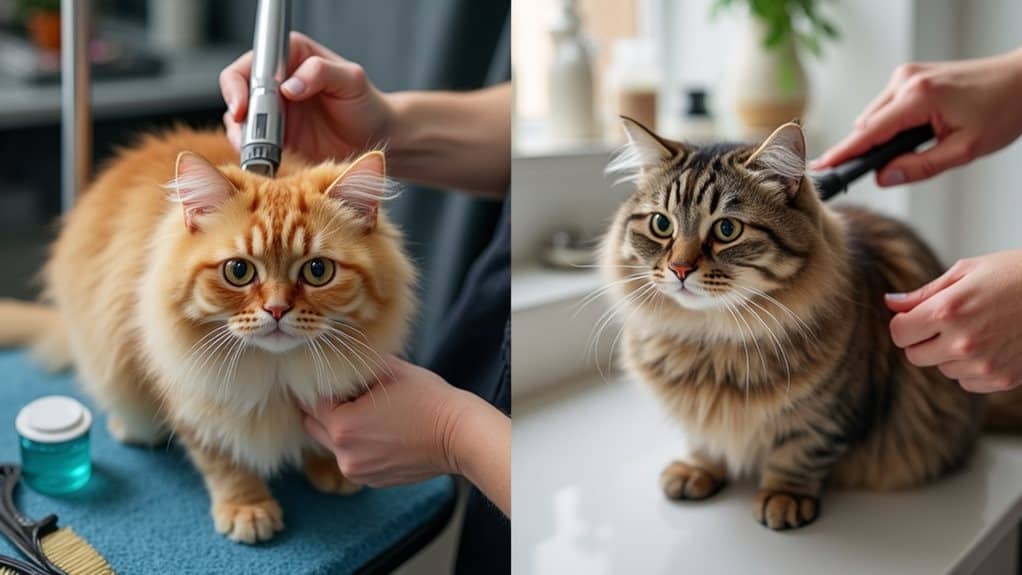
While many cat owners assume their feline companions can handle all their grooming needs, the reality is more nuanced than you might think. Your cat’s grooming frequency depends largely on their coat type, age, and overall health.
Short-haired cats typically need brushing once weekly, while long-haired breeds require daily coat maintenance to prevent painful mats and excessive hairballs. You’ll notice your cat spends hours self-grooming, but they can’t reach everywhere effectively! Regular grooming not only helps maintain a clean coat but also promotes skin health by distributing natural oils throughout their fur.
Senior cats often struggle with flexibility, making your assistance even more important. During seasonal changes, you’ll want to increase brushing sessions as your cat sheds more heavily.
Essential Tools for Home Cat Grooming
Success in home cat grooming starts with having the right tools at your disposal.
Having the right tools is the foundation of successful at-home cat grooming.
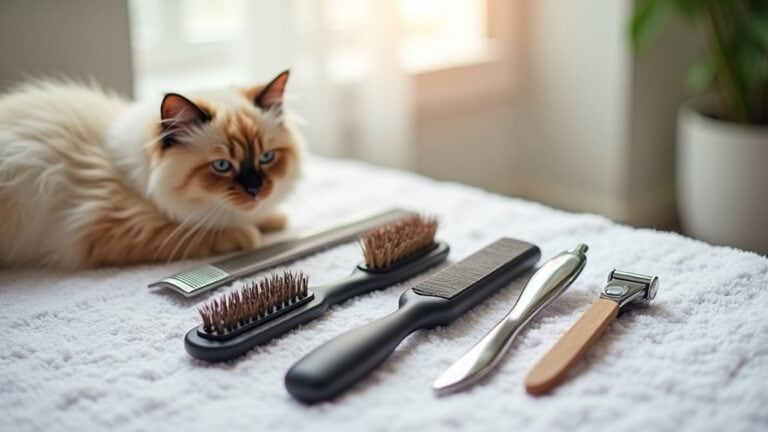
You’ll need a quality brush suited for your cat’s coat type, nail clippers designed specifically for felines, and a gentle pet-specific shampoo for occasional baths. Don’t forget some treats to reward your furry friend’s patience!
Understanding your cat’s grooming frequency is essential—long-haired breeds might need daily brushing, while short-haired cats can manage with weekly sessions.
Remember, consistency matters more than intensity. Regular grooming can enhance overall health and wellbeing while strengthening your bond with your cat.
Tool maintenance shouldn’t be overlooked either. Clean brushes after each use to remove hair and skin cells, and disinfect nail clippers monthly.
Sharp tools make the process easier and less stressful for both of you. When your tools work properly, what might seem like a chore can become a bonding opportunity!
Brushing Techniques for Different Coat Types
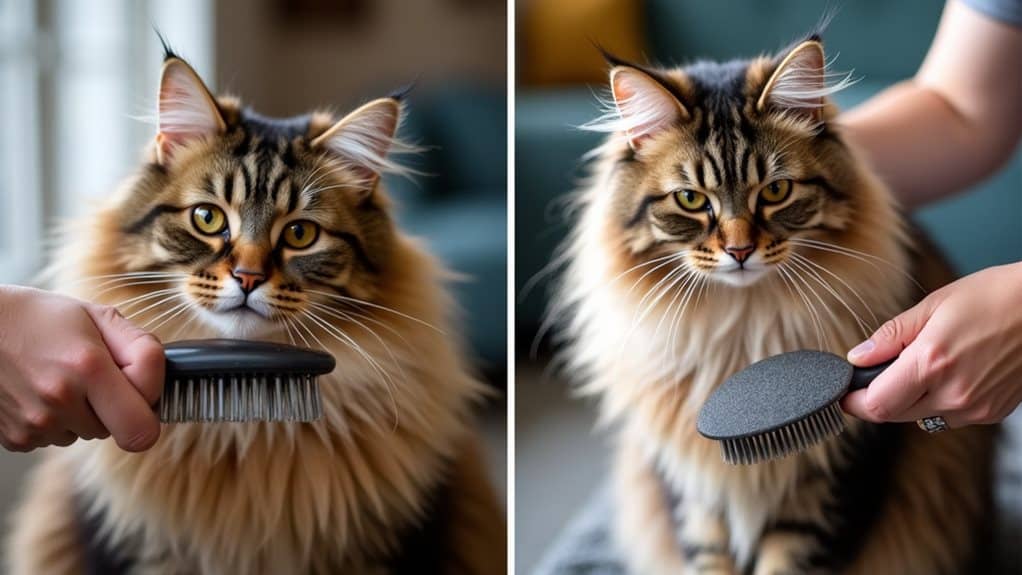
Because each cat’s fur has unique characteristics, mastering the right brushing technique for your feline friend’s specific coat type can make grooming sessions more effective and enjoyable.
For short-haired cats, a fine-toothed metal comb followed by a rubber brush works wonders, with a grooming frequency of once weekly.
Medium-haired felines benefit from slicker brushes used in the direction of hair growth, requiring twice-weekly coat maintenance.
Long-haired beauties like Persians need daily attention with wide-toothed combs followed by bristle brushes to prevent painful mats.
Regular brushing helps detect skin issues early, ensuring a healthier grooming experience for your cat.
Don’t forget those special spots—behind the ears, under the chin, and along the belly—where tangles love to hide!
Nail Trimming: Step-by-Step Guide
You’ll need specialized cat nail clippers, a styptic powder for accidents, and a calm environment before attempting to trim your cat’s claws. It’s important to gather specialized cat nail clippers to ensure the safety and comfort of your pet during the process. Hold your cat gently but firmly, press on each toe pad to extend the claw, and clip only the translucent tip to avoid the pink quick where blood vessels reside. When you’re comfortable with the technique, try trimming just one or two nails per session until your cat adjusts to the routine.
Required Tools
Gathering the right tools before trimming your cat’s nails can make the difference between a stress-free session and a wrestling match with your furry friend.
You’ll need cat-specific nail clippers—either guillotine, scissor, or plier style—as these are designed for the unique curve of feline claws. A small flashlight helps you see the quick (the pink area to avoid), while styptic powder stands ready if you accidentally cut too close.
Consider your grooming frequency when choosing tools—frequent trimmers might invest in premium clippers that stay sharper longer. Additionally, regular nail trimming is crucial to prevent overgrowth and associated pain for the cat.
Don’t forget tool maintenance! Clean your clippers after each use and sharpen them periodically to guarantee clean cuts that won’t split your cat’s nails.
A comfy towel and treats complete your kit, making nail time more pleasant for everyone.
Clipping Technique
Now that your tools are ready, let’s master the art of proper nail clipping technique. When it comes to clipping styles, less is more.
Hold your cat’s paw gently but firmly, pressing the pad to extend the nail. Only trim the transparent tip, staying well away from the pink quick where blood vessels and nerves live.
Grooming safety should be your top priority! If your cat squirms or shows signs of stress, take a break and try again later. Regular nail trimming ensures comfortable movement and overall well-being for your pet.
Never rush the process—it’s better to clip fewer nails in one session than to traumatize your furry friend. Many cats respond well to positive reinforcement, so keep treats nearby as rewards.
Bathing Your Cat: When and How
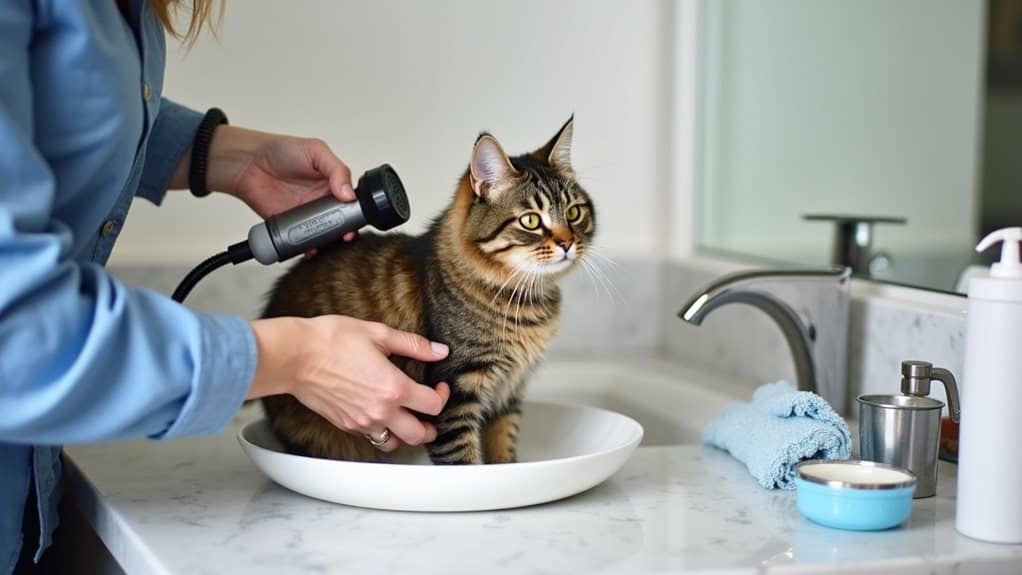
While most cats groom themselves effectively, there are times when you’ll need to give your feline friend a bath—knowing when and how to do this properly can save you both from unnecessary stress.
You’ll need the right supplies, including cat-specific shampoo, several towels, and a non-slip mat to create a safe bathing environment. Preparing a warm, non-slip bathing area is essential for your cat’s comfort.
Let’s explore how often you should bathe your cat, the proper techniques to make bath time less traumatic, and the vital items you’ll want on hand for a successful grooming session.
Bath Frequency Guidelines
Most cats only need a bath every 4-6 weeks at most, and many can go their entire lives without one.
Your feline friend is naturally equipped with a self-cleaning system—their tongue and saliva work together as nature’s grooming tools.
One of the common grooming myths is that cats require regular baths like dogs, but this simply isn’t true!
There are specific situations when bath benefits outweigh a cat’s discomfort: if they’ve gotten into something sticky, developed skin conditions, or can no longer groom themselves effectively due to age or weight.
Senior cats or those with mobility issues might appreciate your help.
Remember, over-bathing can strip crucial oils from your cat’s coat, potentially causing dry skin and increased shedding.
Trust your cat’s natural instincts—they’re cleanliness experts! Regular bathing, when necessary, promotes better circulation and contributes to overall skin health.
Proper Bathing Technique
Three essential steps make up a successful cat bathing routine that won’t end in scratches or trauma.
First, gather all supplies before bringing your feline friend into the bathroom to minimize cat bathing stress. This preparation helps reduce grooming anxiety for both of you.
Next, use lukewarm water and gently wet your cat from neck to tail, avoiding the face and ears. Talk soothingly throughout the process to keep them calm.
- Apply cat-specific shampoo and massage it in thoroughly
- Rinse completely—leftover soap can irritate skin
- Wrap your cat in a warm towel immediately after
Additionally, ensuring that your cat’s coat is free of tangles and mats before bathing greatly enhances overall coat health, making the bathing process smoother and more enjoyable for your pet.
Essential Bathing Supplies
The right supplies make all the difference between a successful cat bath and a water-soaked disaster. When preparing to bathe your feline friend, gather cat-specific shampoo options designed for their sensitive skin—never use human products, which can cause irritation.
Choose from tearless formulas, medicated options for skin conditions, or natural ingredients for cats with allergies.
You’ll also need several soft towels, a non-slip mat for the tub or sink, and a handheld sprayer if possible. A fine-toothed comb helps work through tangles before bathing, while treats provide positive reinforcement. Regular grooming can reduce shedding by up to 90%, making bath time more manageable and less messy.
Remember that grooming frequency depends on your cat’s coat type and lifestyle—most cats only need baths every 4-6 weeks, while others with skin conditions might require more frequent bathing under veterinary guidance.
Ear and Eye Care You Can Manage at Home
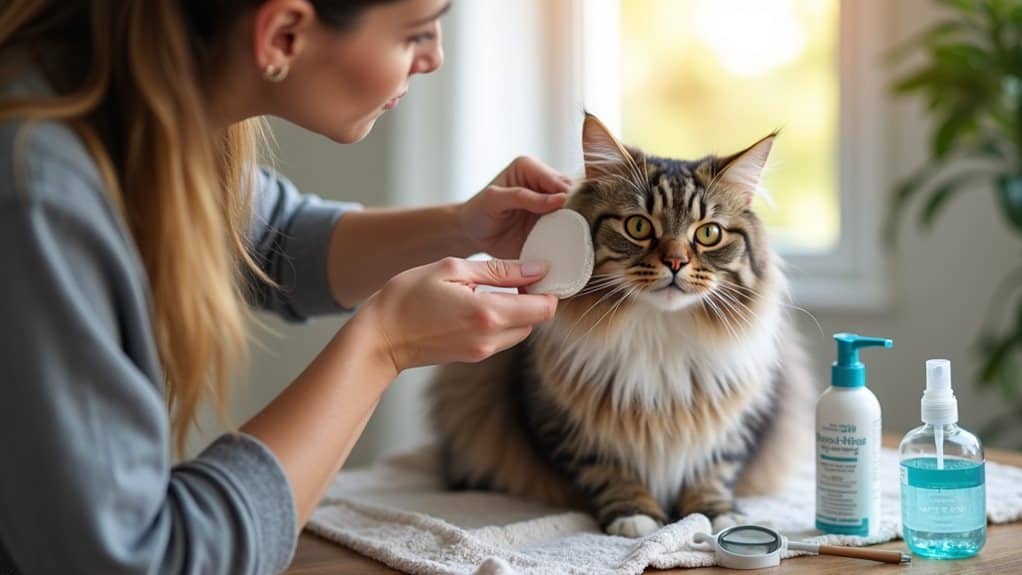
While professional groomers expertly handle many cat care tasks, you can easily manage basic ear and eye maintenance at home between appointments.
Regular ear and eye cleaning prevents infections and helps you spot problems early. Most cats need this routine care every few weeks, depending on their breed and health.
For effective home care, you’ll need:
- Cotton balls or pads (never cotton swabs which can damage ears)
- Vet-approved ear cleaning solution
- Sterile eye wipes or clean, damp washcloths
When performing ear cleaning, work gently on the visible parts only.
For eye cleaning, wipe from the inner corner outward, using a fresh section for each eye to prevent cross-contamination.
If you notice unusual discharge, redness, or your cat seems uncomfortable, it’s time to consult your vet.
When to Call the Professionals
Although many cat owners become skilled at basic grooming tasks, recognizing when to seek professional help can save you and your feline friend unnecessary stress.
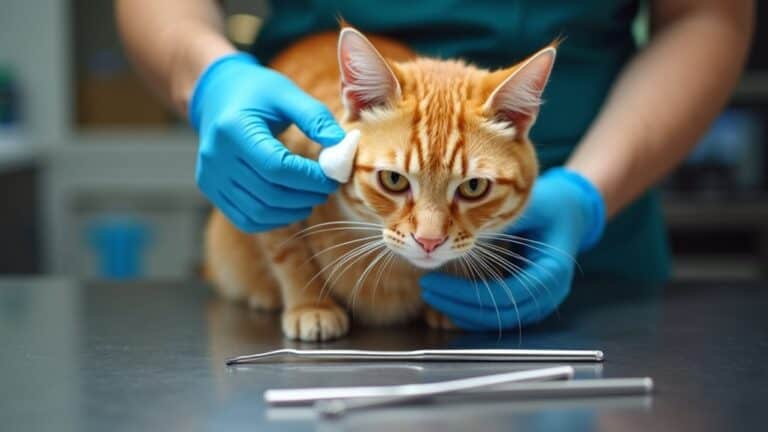
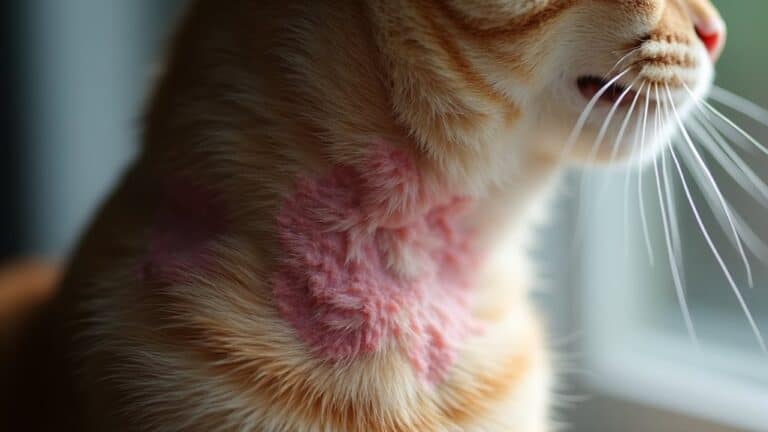
Watch for clear grooming signs that it’s time to call in the experts: excessive matting that doesn’t respond to gentle brushing, skin issues like redness or flaking, or a cat who becomes extremely agitated during home grooming sessions.
The professional benefits extend beyond just a prettier kitty.
Groomers can spot potential health concerns you might miss, like lumps under dense fur or early signs of ear infections.
They’re also equipped to handle the trickier tasks like nail trimming on resistant cats or addressing severe matting without causing pain.
You’ll both appreciate the results—your cat will feel better, and you’ll strengthen your bond without the drama of difficult grooming battles.
Creating a Positive Grooming Experience
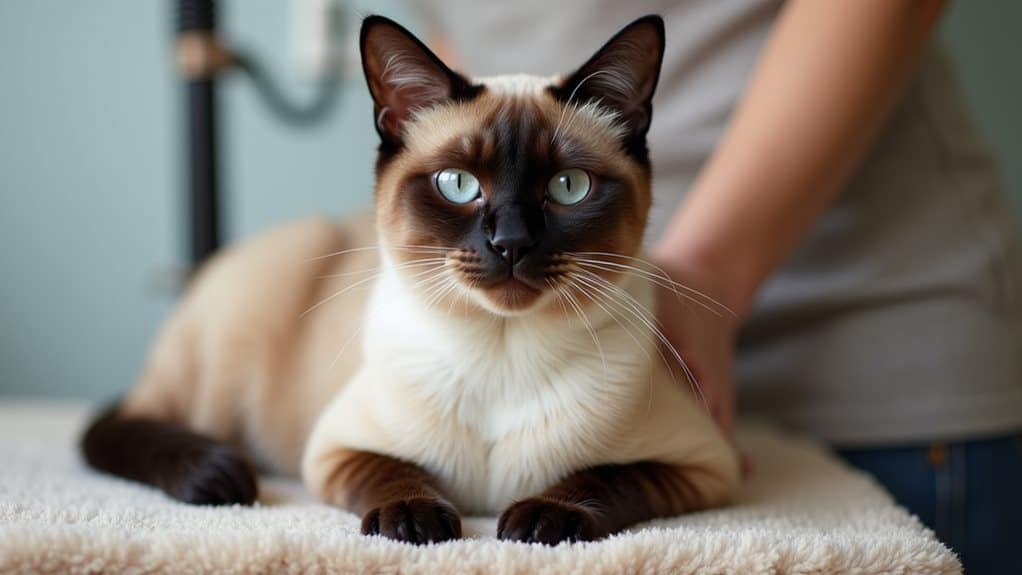
Creating a successful grooming routine starts with understanding your cat’s unique personality and preferences.
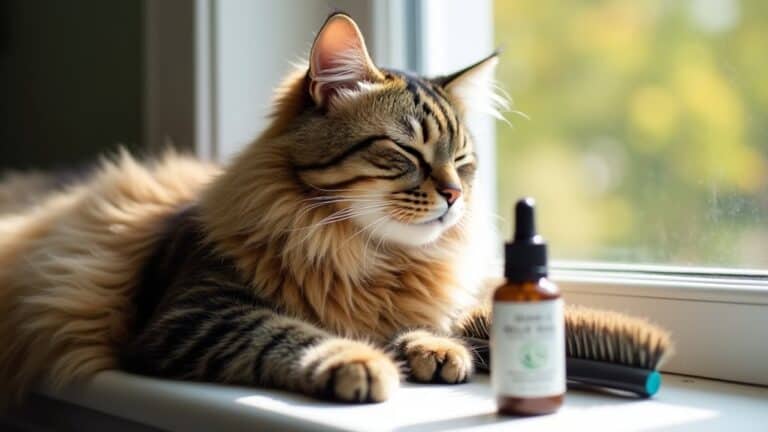
You’ll notice improved grooming comfort when you follow your cat’s cues and introduce grooming tools gradually. Cats respond well to positive reinforcement—offer treats and praise during and after each grooming session.
To make grooming enjoyable for both of you:
- Choose a quiet time when your cat is already relaxed, like after a meal
- Start with short sessions (just 2-3 minutes) and gradually increase duration
- Keep favorite treats handy to reward cooperation
Frequently Asked Questions
How Much Does Professional Cat Grooming Typically Cost?
You’ll typically pay $50-$100 for professional cat grooming. Grooming price ranges vary based on factors influencing cost like your cat’s size, coat condition, temperament, and the specific services you’re requesting.
Can I Use Human Shampoo on My Cat in Emergencies?
Ever thought about the pH differences? You shouldn’t use human shampoo on cats, even in emergencies. It’ll irritate their skin. For emergency grooming tips, consider pet wipes, plain water, or cornstarch as human shampoo alternatives.
Is Sedation Necessary for Extremely Anxious Cats During Grooming?
Sedation isn’t always necessary. You can try anxiety management techniques like short sessions, gentle handling, and positive reinforcement. Consider grooming alternatives such as dry shampoos or professional groomers experienced with anxious cats when needed.
How Do I Safely Remove Matted Fur Without Hurting My Cat?
Like untangling a delicate knitting project, work through matted fur with patience. You’ll need proper grooming tools, such as mat splitters or blunt-tipped scissors. Work slowly, holding mats at their base to avoid pulling your cat’s skin.
Are Certain Cat Breeds More Difficult to Groom Than Others?
Yes, some breeds require more effort. Persian grooming demands daily attention due to their dense, fine coats. Maine Coon care isn’t as intensive, but you’ll need regular brushing to prevent mats in their long, shaggy fur.
Final Thoughts
While professional groomers offer expertise with difficult cats, you’ll find daily maintenance at home builds a stronger bond. Your gentle brushing prevents mats; their specialized tools handle serious tangles. You’ve learned the basics of nail trimming and ear care, but they’re trained for challenging situations. Remember, regular home grooming keeps costs down, yet occasional professional sessions guarantee your cat’s complete health—a perfect balance that leaves everyone purring with satisfaction.