The Best Fluffy Pancakes recipe you will fall in love with. Full of tips and tricks to help you make the best pancakes.


To boost your cat’s hydration, place multiple water stations away from food in quiet spots using ceramic or stainless steel bowls. Consider a wet food diet (70-80% moisture) instead of dry kibble (under 10%), or mix both for moderate hydration. Watch for dehydration signs like sunken eyes and decreased skin elasticity. Try flavor-enhancing drops or electrolyte powders for picky drinkers. Clean bowls regularly to maintain freshness. These simple adjustments can transform your feline’s drinking habits.
Understanding Your Cat’s Natural Hydration Needs
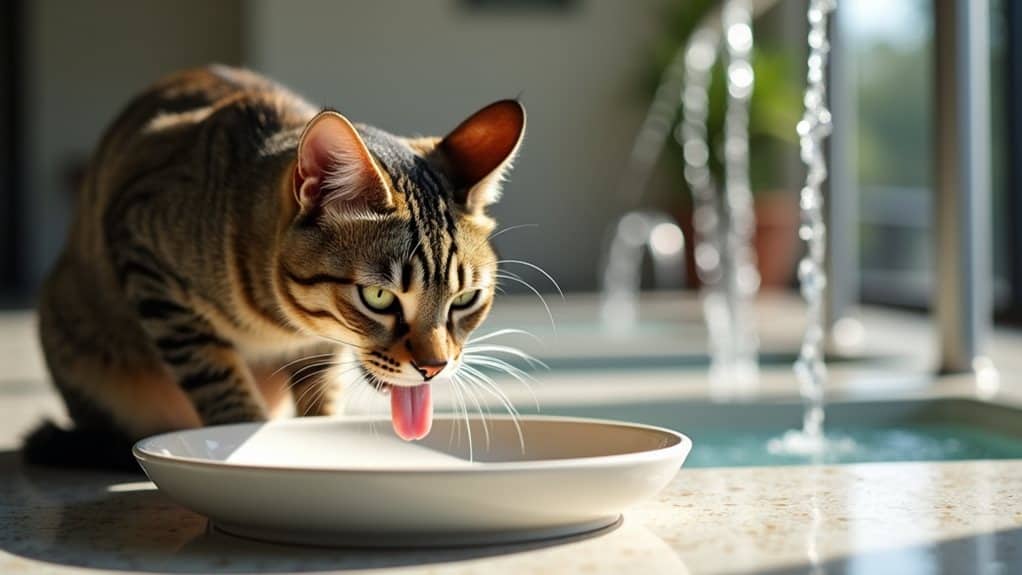
Your cat’s ancestors were desert dwellers, and their natural instincts haven’t fully adapted to domestic life. This explains their sometimes puzzling hydration habits!
Cats typically need about 3.5-4.5 ounces of water per 5 pounds of body weight daily. However, they don’t always seek water when thirsty. Instead, they’ve evolved to get moisture from prey—something your house cat isn’t hunting.
That’s why you’ll notice your kitty doesn’t drink as frequently as your dog might. Don’t worry, though! Once you understand these natural tendencies, you can work with their instincts rather than against them. Additionally, knowing that proper hydration is crucial for preventing urinary tract issues can help you encourage your kitty to drink more water.
Signs of Dehydration in Felines
Recognizing the six critical signs of dehydration in your cat could literally save their life.
When your furry friend loses too much fluid, they’ll show telltale dehydration symptoms like sunken eyes, dry gums, and decreased skin elasticity. If you gently pinch the skin between their shoulders and it doesn’t snap back quickly, that’s a red flag!
You might also notice lethargy, reduced appetite, and concentrated urine. Monitoring water intake is essential, so don’t wait until these signs appear to implement hydration tips. Place multiple water bowls throughout your home, consider a cat fountain (many cats love running water!), and mix wet food into their diet.
Water Bowl Placement and Selection Strategies
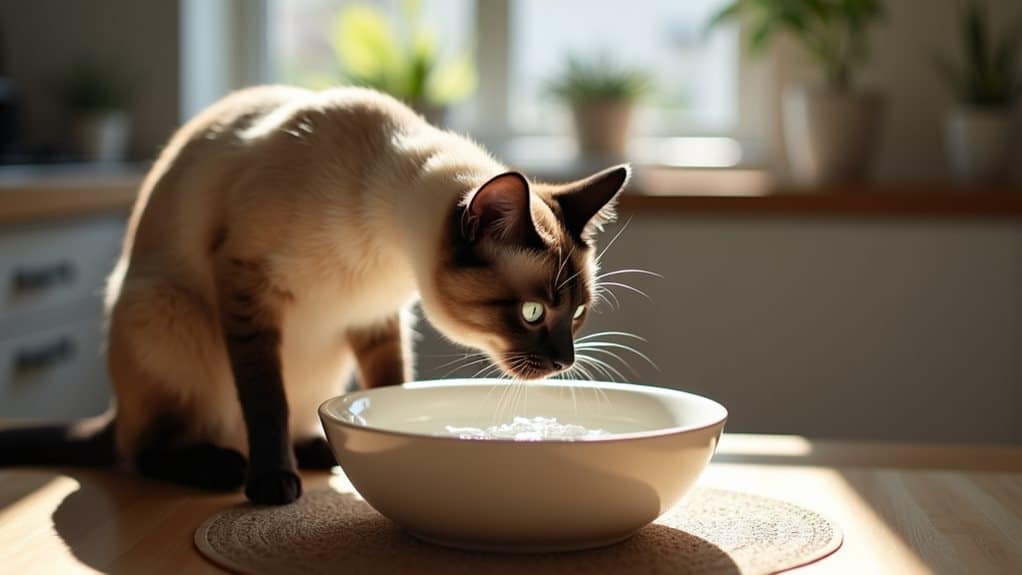
You’ll boost your cat’s water intake with smart bowl placement throughout your home, guaranteeing they’re never far from hydration.
Place water stations away from food bowls and litter boxes, as cats naturally prefer their water source separate from eating and elimination areas.
Consider trying different bowl materials like ceramic, glass, or stainless steel, as some cats have strong preferences about what touches their whiskers during drinking time. Additionally, ensuring a higher water intake can significantly reduce the risk of Feline Lower Urinary Tract Disease, which is essential for your cat’s overall well-being.
Strategic Bowl Positioning
Finding the perfect spot for your cat’s water bowl isn’t just about convenience—it’s a strategic decision that can dramatically improve your feline’s hydration habits. Reflect on both bowl height and bowl material when choosing your setup—ceramic and stainless steel options often attract cats more than plastic varieties.
| Location Factor | Benefits | Considerations |
|---|---|---|
| Away from food | Mimics natural preferences | Refresh water daily |
| Multiple locations | Increases chance of drinking | Each bowl needs cleaning |
| Quiet areas | Reduces stress while drinking | Keep away from litter box |
You’ll want to place bowls in low-traffic areas where your cat feels safe. Many cats prefer drinking away from their eating area, so try positioning water in different rooms. Don’t forget to reflect on your cat’s mobility—older cats might appreciate bowls placed at comfortable heights. Additionally, placing the bowl in a cool spot can encourage your cat to drink more water, particularly during warm weather.
Multiple Water Stations
While a single water bowl might seem sufficient, strategic placement of multiple water stations throughout your home can transform your cat’s drinking habits.
Cats are naturally wary creatures who don’t like to feel cornered while drinking, so water station placement becomes essential to their comfort.
You’ll notice increased hydration when you offer multiple bowl options in different rooms. Place stations in quiet corners of your living room, bedroom, and home office where your cat already spends time.
This convenience encourages more frequent sipping throughout the day. Some pet parents even report their previously reluctant drinkers becoming water enthusiasts after implementing this simple change! Additionally, ensuring the bowls are made of cat-friendly materials can improve your cat’s willingness to drink and keep them hydrated.
Bowl Types Matter
Beyond station placement, the type of bowl you select can make a remarkable difference in your cat’s willingness to drink. Cats are notoriously finicky creatures, and they often have strong preferences about bowl materials. Many cats dislike metal bowls because they can create strange reflections or make clicking sounds against tags.
Instead, try ceramic or glass options, which don’t impart flavors to the water.
Bowl shapes matter too! Shallow, wide bowls are typically preferred because many cats dislike when their whiskers touch the sides (a condition called “whisker fatigue”). You’ll notice your cat drinking more comfortably from a bowl where their sensitive whiskers aren’t cramped.
Some cats even prefer running water fountains that mimic natural streams. It’s worth experimenting with different options until you find what makes your particular feline friend happiest! Additionally, ensuring that your cat’s diet includes essential fatty acids can further support their overall coat health, which is linked to proper hydration.
Wet Food vs. Dry Food: Impact on Hydration
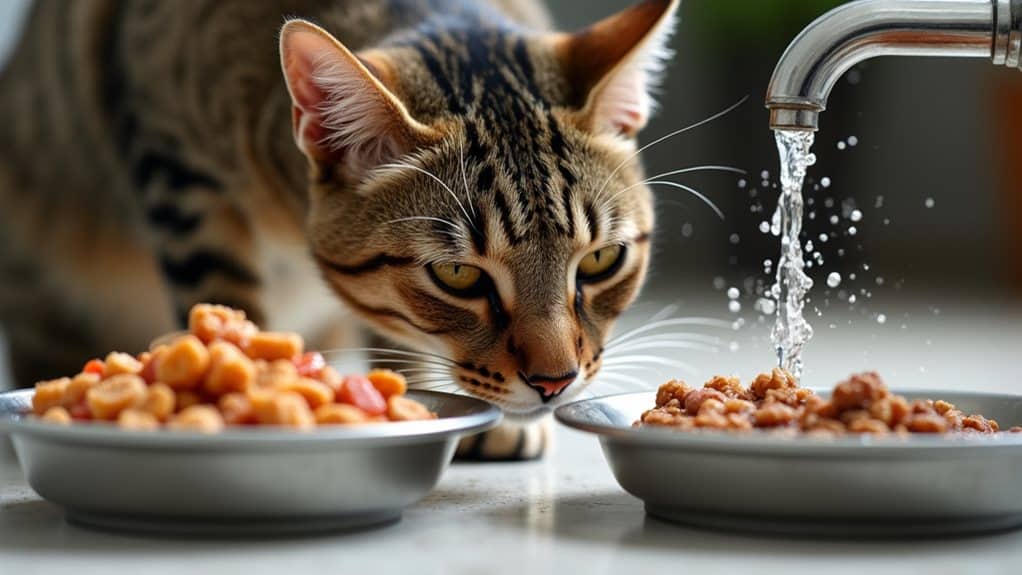
Although both types of cat food provide nutrition, the choice between wet and dry food greatly affects your cat’s hydration levels. Wet food benefits your feline friend by providing considerable moisture content, often containing 70-80% water. This helps keep your cat naturally hydrated, especially if they’re not big water drinkers. Dry food drawbacks include its low moisture content (typically under 10%), which can contribute to dehydration if your cat doesn’t drink enough water separately. It’s important to remember that regular flea treatment is also essential for overall feline health.
| Food Type | Water Content | Hydration Impact |
|---|---|---|
| Wet Food | 70-80% | Excellent |
| Dry Food | 6-10% | Poor |
| Mixed Diet | 35-45% | Good |
| Raw Food | 65-75% | Very Good |
You don’t need to completely eliminate dry food—many cats enjoy it! Instead, consider a balanced approach with both options.
Enticing Water Features and Fountains for Cats
Many cats don’t naturally drink enough water, even when you’ve provided a balanced diet. That’s where water fountains come in—they’re not merely fancy accessories but practical tools for improving your feline’s hydration.
Cats are naturally drawn to moving water, which explains why yours might prefer drinking from the faucet. Water fountains provide this sensory stimulation that static bowls simply can’t match. The gentle bubbling or flowing sound creates an irresistible invitation for curious cats to investigate and drink more frequently. Creating a stress-free environment with calming scents can further encourage your cat to explore and enjoy their water sources.
Consider placing multiple water stations around your home to encourage water play. Some fountains even feature different flow settings or cascading designs that appeal to your cat’s playful nature.
Creative Hydration Boosters and Supplements
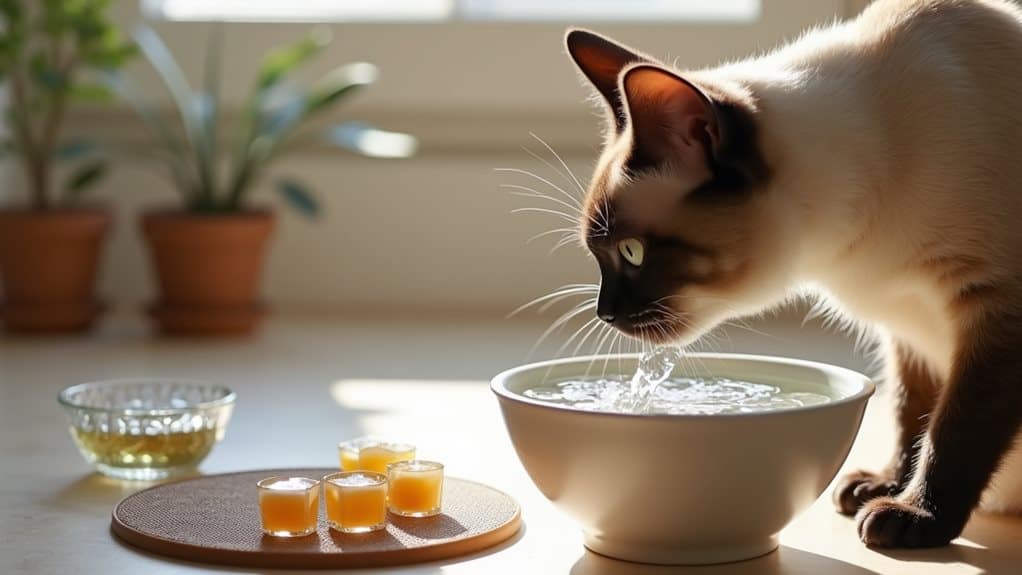
If your feline friend turns up their nose at plain water, flavor improving drops can transform boring H2O into an irresistible treat.
You’ll find these drops in various cat-friendly flavors, making it easier to sneak extra hydration into your pet’s daily routine.
For active or older cats who need extra support, electrolyte pet powders offer a simple way to supplement their water with crucial minerals that help maintain proper hydration. Additionally, maintaining a clean environment can further encourage your cat to drink more water and stay hydrated.
Flavor Enhancing Drops
Because cats can be notoriously picky drinkers, flavor improving drops have become a popular solution for pet parents struggling with feline hydration. These liquid additives transform plain water into a tasty treat that encourages your finicky feline to drink more throughout the day.
- Chicken and fish flavor options are typically most appealing to cats, mimicking their natural prey preferences.
- Just a few drops can make a notable difference in your cat’s water consumption.
- Most products offer hydration benefits through added electrolytes or nutrients.
- Low-calorie formulations guarantee you’re not trading hydration for weight gain.
You’ll want to introduce these drops gradually, allowing your cat to adjust to the new taste. It’s also important to remember that while some cats enjoy flavored water, many cats may still experience issues with lactose intolerance when consuming milk alternatives.
Many owners report their previously water-avoidant cats now enthusiastically lap up their improved beverages!
Electrolyte Pet Powders
Similar to flavor drops, electrolyte pet powders offer another creative way to boost your cat’s hydration. These supplements dissolve easily in water and provide crucial minerals that support your feline’s overall health.
One common hydration myth is that cats get enough moisture from wet food alone, but many veterinarians recommend additional water intake for peak kidney function.
You’ll find various electrolyte benefits for your furry friend, including improved energy levels and better nutrient absorption.
When choosing a powder, look for cat-specific formulas without artificial colors or sweeteners. Start with a small amount—just a pinch in fresh water—to see if your cat approves of the subtle taste change.
Don’t be discouraged if your finicky feline turns up their nose initially; gradually introducing new hydration methods often yields the best results.
Frequently Asked Questions
Can Cats Drink Milk Instead of Water?
No, you shouldn’t give cats milk. Despite popular hydration myths, most cats are lactose intolerant. Water is best for their health, though some milk alternatives designed specifically for felines are available.
How Often Should I Clean My Cat’s Water Fountain?
You should clean your cat’s water fountain weekly, disassembling and washing all parts thoroughly. For ideal water fountain maintenance, rinse the bowl daily and change filters according to manufacturer’s instructions. Regular cleaning frequency prevents bacteria growth.
Do Indoor Cats Need More Water Than Outdoor Cats?
Like desert travelers need oases, indoor cats need more attention to hydration. Your indoor feline doesn’t experience outdoor behavior like hunting and finding natural water sources, so you’ll need to monitor their water intake more carefully.
Is Bottled Water Better for Cats Than Tap Water?
Bottled water offers few benefits over tap water for cats. If your tap water’s safe for you, it’s safe for them. You’ll save money using filtered tap water instead of bottled options.
Should I Add Ice Cubes to My Cat’s Water?
You watch as your curious cat approaches… Yes, you can add ice cubes! Some cats with temperature sensitivity prefer cool water. Try it and see if your cat’s preferences include this invigorating option.
Final Thoughts
Your fabulous feline’s fluid intake fundamentally affects their health. By providing proper placement of water bowls, switching to wet food, and adding water features, you’ll keep your cat happily hydrated. Watch for warning signs of dehydration and act quickly if they appear. Remember, your creative care contributes to a content cat with peak wellness. With these simple strategies, you’re setting your furry friend up for a healthier, happier life.