
The Best Fluffy Pancakes recipe you will fall in love with. Full of tips and tricks to help you make the best pancakes.

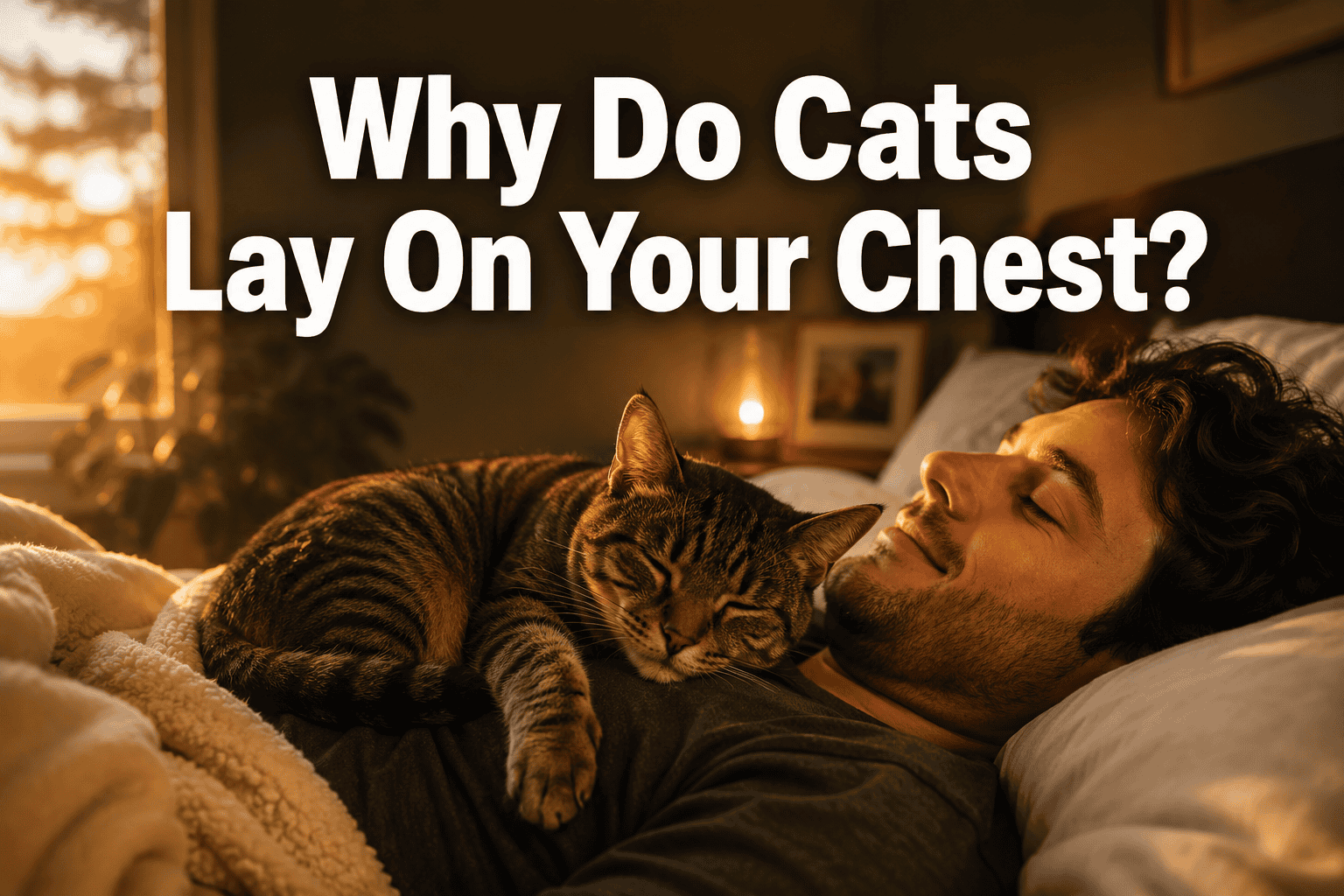
Your cat has an entire house to sleep in — a cat tree, a plush bed, a sunny windowsill — and yet they choose you. Specifically, your chest. If you’ve ever wondered why do cats lay on your chest at every opportunity, you’re not imagining a deeper meaning. There genuinely is one. Cat behaviour experts and devoted cat owners alike agree: this habit is loaded with affection, instinct, and a surprising amount of feline logic.
Key Takeaways
- Cats lay on your chest primarily for warmth, security, and emotional bonding.
- Your heartbeat and breathing rhythm are genuinely soothing to cats — it echoes their earliest memories.
- This behaviour is a strong sign of trust, not just convenience.
- A sudden increase in chest-laying can sometimes signal stress or illness worth monitoring.
- You can gently redirect the behaviour if it disrupts your sleep, without damaging your bond.
Table of Contents
- The Real Reasons Cats Lay on Your Chest
- What Your Cat Is Actually Communicating
- When Chest-Laying Might Signal Something More
- How to Respond (and When to Redirect)
- FAQ
- Conclusion
The Real Reasons Why Do Cats Lay on Your Chest

1. Your Body Is a Living Heater 🔥
Cats run warmer than humans — their ideal body temperature sits between 100–102°F. They’re instinctively drawn to heat sources, and your chest is one of the best around. It’s warm, soft, and reliably available at nap time.
This is especially true for indoor cats who don’t have sunny outdoor patches to bask in. Your chest becomes their personal heated blanket.
2. Your Heartbeat Takes Them Back to Kittenhood
This one is genuinely touching. The rhythmic sound of your heartbeat and the steady rise and fall of your breathing closely mimic the sensory experience of being curled up with their mother as a newborn kitten. It’s deeply comforting at a neurological level.
It’s the same reason kittens pile on top of each other — warmth and rhythmic sound equal safety. Your cat never fully outgrows that association. For more on how deeply cat sleep patterns are tied to comfort and security, it’s worth a read.
3. It’s a Trust Declaration
In the feline world, exposing your belly or sleeping in a vulnerable position near someone is a massive deal. Cats don’t do that around threats. When your cat settles onto your chest — eyes closing, body relaxed — they’re essentially saying “I trust you completely.”
This is one of the clearest signals in cat behaviour that your bond is solid. Rescue cats especially may take months before they feel safe enough to do this, so if your rescue cat finally climbs onto your chest, that’s a genuine milestone.
4. They’re Marking You as Theirs 🐾
Cats have scent glands across their bodies — on their cheeks, paws, and flanks. When they press against you and settle in, they’re transferring their scent onto you. To other animals, this signals ownership.
You’re not just a warm surface. You’re their warm surface. This territorial marking is a normal, affectionate part of feline wellness and social bonding.
5. They Want Your Attention
Sometimes the answer is refreshingly simple. Your cat is on your chest because it works. The moment they land there, you stop scrolling, stop reading, and start petting. Cats are smart — they learn quickly what gets results.
If your cat tends to do this right before mealtimes or when you’ve been away all day, attention-seeking is almost certainly the driver. Check out our guide on how to show your cat love in their language for ways to meet that need proactively.
6. Stress Relief — For Both of You
Being close to a trusted human lowers a cat’s anxiety levels. If something in the environment has changed — a new pet, a house move, louder-than-usual days — your chest becomes a safe harbour.
“Your cat isn’t being clingy. They’re self-regulating, and you’re their comfort object.”
Interestingly, the benefit runs both ways. Research consistently shows that the science behind cat purring points to measurable stress reduction in humans too. Cat purring operates at frequencies between 25 and 50 Hz — a range associated with lowered cortisol and reduced anxiety in the people nearby. That purring chest-sitter is doing your cortisol levels a favour.
What Your Cat Is Actually Communicating
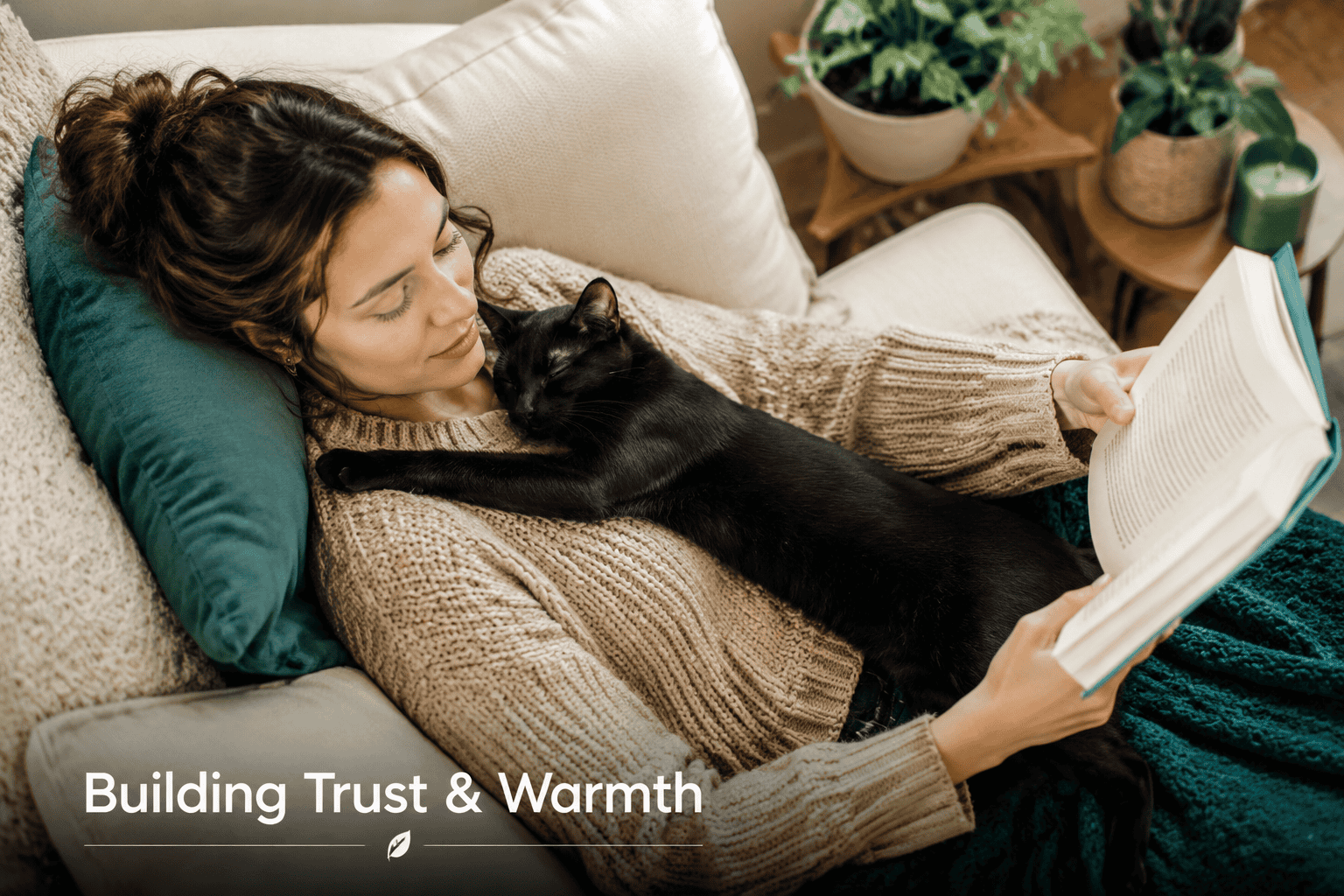
Reading the Full Picture
Why do cats lay on your chest in different ways, and does the how matter? Absolutely. A cat that kneads your chest before settling is showing deep contentment — that kneading behaviour traces directly back to nursing. A cat that simply flops down and stares at you is more likely seeking attention or food.
Here’s a quick reference:
| Behaviour | What It Usually Means |
|---|---|
| Kneading + purring | Deep contentment, strong bond |
| Flopping down + staring | Attention or hunger |
| Settling quietly, eyes closing | Comfort, trust, stress relief |
| Restless, won’t settle | Anxiety or mild discomfort |
| Sudden increase in frequency | Worth monitoring — possible stress or illness |
It’s Not the Same as Sleeping at Your Feet
Cats who sleep at your feet are also showing affection, but with a slight difference — they’re keeping proximity while maintaining an escape route. Chest-laying requires full vulnerability. It’s a higher-trust behaviour, and that distinction matters in understanding your individual cat’s personality.
When Chest-Laying Might Signal Something More
Most of the time, this behaviour is pure affection and cat care instinct. But if your cat suddenly starts doing it much more than usual — especially if paired with changes in appetite, energy, or grooming — it’s worth paying attention.
Cats sometimes seek extra closeness when they’re feeling unwell or anxious. It’s their way of seeking comfort when something feels off. If you notice other changes alongside the increased clinginess, a vet check is always a smart move. Keeping an eye on senior cat health is especially important, as older cats may increase contact-seeking as a response to cognitive or physical changes.
How to Respond — and When to Redirect
Lean Into It (When You Can)
If you’re comfortable and your cat is settled, enjoy it. This kind of close contact strengthens your bond and supports your cat’s feline wellness. There’s no downside to letting it happen when it suits you both.
Setting Gentle Limits
If chest-sleeping disrupts your rest or breathing, you don’t have to just endure it. Gently move your cat to a spot beside you — not off the bed entirely — so they still feel close. Consistency matters here. Rewarding them with a stroke when they settle next to you rather than on you teaches the alternative without rejection.
A cosy heated cat bed placed right beside yours can work brilliantly. Pair it with mental stimulation activities during the day so your cat arrives at bedtime already satisfied and less needy.
Never Punish the Behaviour
Pushing your cat away sharply or using a loud voice will confuse them and erode trust — especially for anxious cats. Gentle redirection always wins.
FAQ
Q: Why does my cat only lay on my chest and not my partner’s?
Cats bond most strongly with the person who feeds them, plays with them most, and responds to their cues. Your cat has simply decided you’re their person. It’s a compliment.
Q: Is it safe to let my cat sleep on my chest all night?
For most healthy adults, yes. The main concern is disrupted sleep for you. If your cat is very large or you’re a light sleeper, a spot beside you is a good compromise.
Q: Why do cats lay on your chest when you’re sick?
Cats are sensitive to changes in your body temperature, breathing patterns, and scent. When you’re unwell, these signals shift — and many cats respond by staying closer. It’s genuine comfort-giving behaviour.
Q: My rescue cat just started doing this after six months. Why now?
Trust takes time, especially for cats with difficult histories. Six months of consistent, gentle care has finally convinced them you’re safe. That first chest-sit is a huge win.
Q: Does this behaviour mean my cat loves me?
In cat terms, yes — absolutely. Physical closeness, vulnerability, and scent-marking are all feline expressions of deep attachment.
Q: Should I be worried if my cat suddenly stops doing it?
A sudden change in any affectionate behaviour is worth noting. If your cat also seems withdrawn, is eating less, or has other symptoms, a vet visit makes sense.
Conclusion
So, why do cats lay on your chest? Because you’re warm, you’re safe, you sound like home, and you belong to them. Every time your cat climbs up and settles in, they’re expressing trust, affection, and a need for closeness that goes all the way back to their earliest days.
The best thing you can do as a cat owner is receive it graciously — and redirect gently when you need to. Your bond with your cat is built in exactly these small, quiet moments.
Actionable next steps:
- Notice when your cat does this most — it reveals what they’re seeking (warmth, attention, comfort).
- If it disrupts sleep, introduce a heated bed beside yours and reward your cat for using it.
- If the behaviour suddenly spikes, monitor for other health or stress signals and consult your vet if concerned.
- Deepen the bond further by exploring how to show your cat love in their language — on their terms.