The Best Fluffy Pancakes recipe you will fall in love with. Full of tips and tricks to help you make the best pancakes.

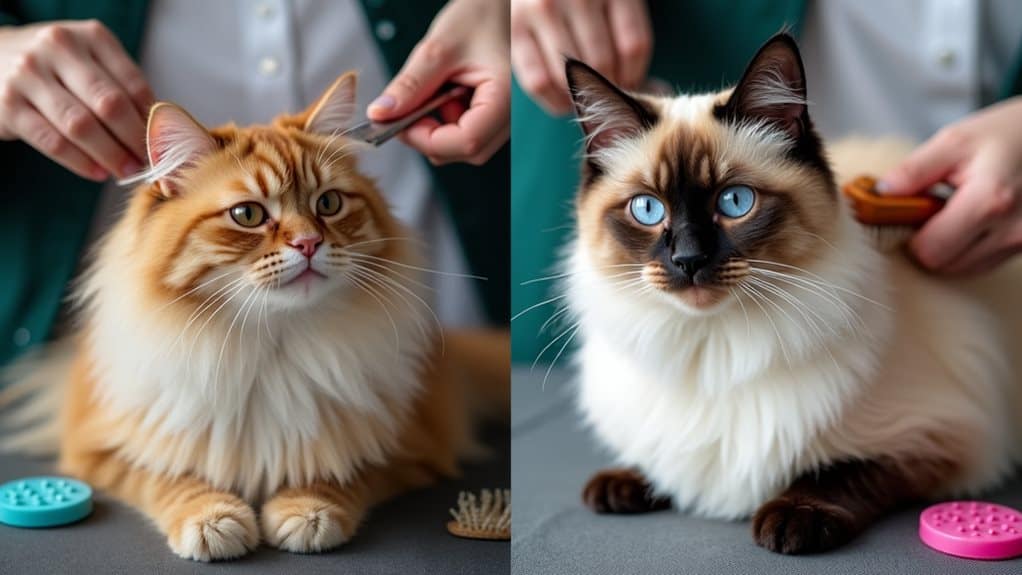
Long-haired cats need daily brushing to prevent painful mats, while short-haired cats typically require weekly grooming. You’ll need different tools for each: wide-toothed combs and slicker brushes for long coats, rubber brushes for short coats. Increase your grooming frequency during spring and fall shedding seasons for both types. Bathing should happen every 3-4 weeks for long-haired cats and every 6-8 weeks for short-haired ones. The right grooming routine keeps your furry friend healthy and your home cleaner.
Understanding Cat Coat Types and Their Unique Needs
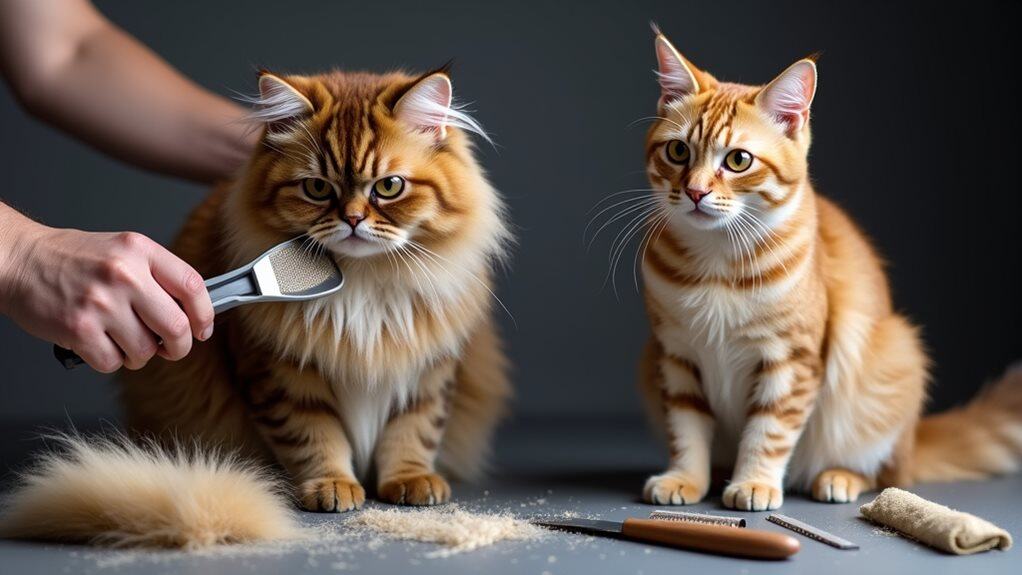
When it comes to properly grooming your feline friend, understanding their coat type is absolutely vital. Cats come with diverse coat characteristics that determine how you’ll manage their fur care routine.
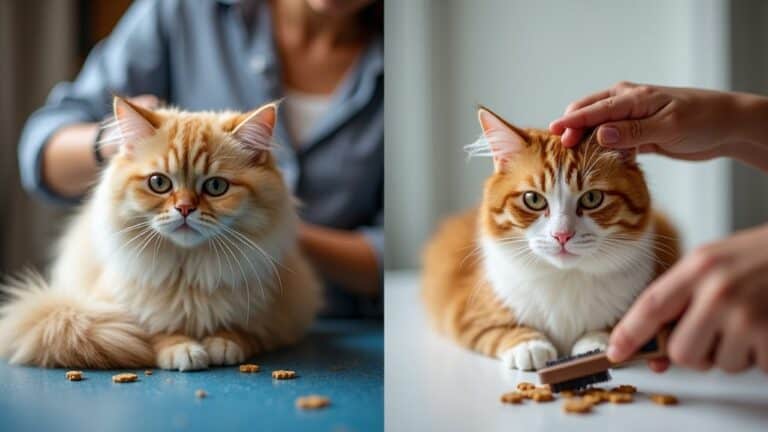
Short-haired cats typically need weekly brushing to remove loose fur and distribute natural oils, while their long-haired counterparts require daily attention to prevent painful mats and tangles. You’ll notice that Persian cats, with their luxurious coats, have different needs than sleek Siamese breeds.
The grooming frequency guidelines vary markedly based on coat length, thickness, and texture. During shedding seasons (spring and fall), you’ll want to increase brushing for all cats. Regular grooming enhances overall health by reducing incidence of mats and tangles in fur.
Essential Grooming Tools for Long-Haired Cats
Long-haired cats need your attention with specialized detangling equipment that prevents painful mats and keeps their luxurious coats healthy.
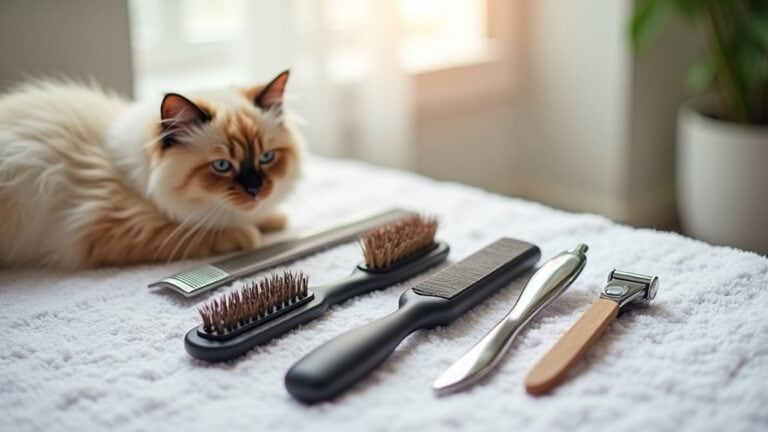
You’ll want to invest in wide-toothed combs and slicker brushes specifically designed to work through thick fur without pulling or causing discomfort.
Your mat prevention arsenal should also include leave-in conditioners and detangling sprays, which can make your grooming sessions more pleasant for both you and your fluffy companion. Additionally, incorporating de-shedding tools into your routine will help reduce allergens and hairballs, ensuring a healthier environment for both you and your cat.
Specialized Detangling Equipment
Because your fluffy feline friend’s luxurious coat requires special attention, investing in the right detangling tools can make grooming sessions less stressful for both of you.
Quality detangling brushes with flexible, rounded pins can gently work through knots without pulling your cat’s sensitive skin. Look for models specifically designed for long-haired breeds that reach through the topcoat to the undercoat.
Grooming gloves offer a fantastic alternative for cats who shy away from traditional brushes. These handy tools allow you to pet your cat while simultaneously removing loose fur and working out minor tangles. Your cat might even enjoy the massage-like sensation!
For particularly stubborn mats, you’ll want a specialized dematting tool with curved blades that safely slice through tough knots without harming your cat’s skin. Regular grooming not only improves your cat’s appearance but also promotes skin health by distributing natural oils throughout their coat.
Mat Prevention Arsenal
Preventing mats before they form is far simpler than battling them later, which is why building your cat grooming arsenal matters tremendously.
For long-haired felines, you’ll need specialized tools that go beyond basic brushes. Start with a quality steel comb with both wide and narrow teeth to work through different coat densities. A slicker brush should be your daily go-to for effective matting prevention.
The secret to success isn’t just having the right tools—it’s all about grooming frequency. Plan for short, regular sessions rather than marathon grooming battles. Regular grooming enhances cat health by promoting a healthy coat and skin.
Most long-haired cats need attention every 1-2 days, while short-haired friends can manage with weekly sessions. You’ll both be happier when grooming becomes a calm routine rather than a dreaded chore!
Effective Brushing Techniques for Short-Haired Breeds
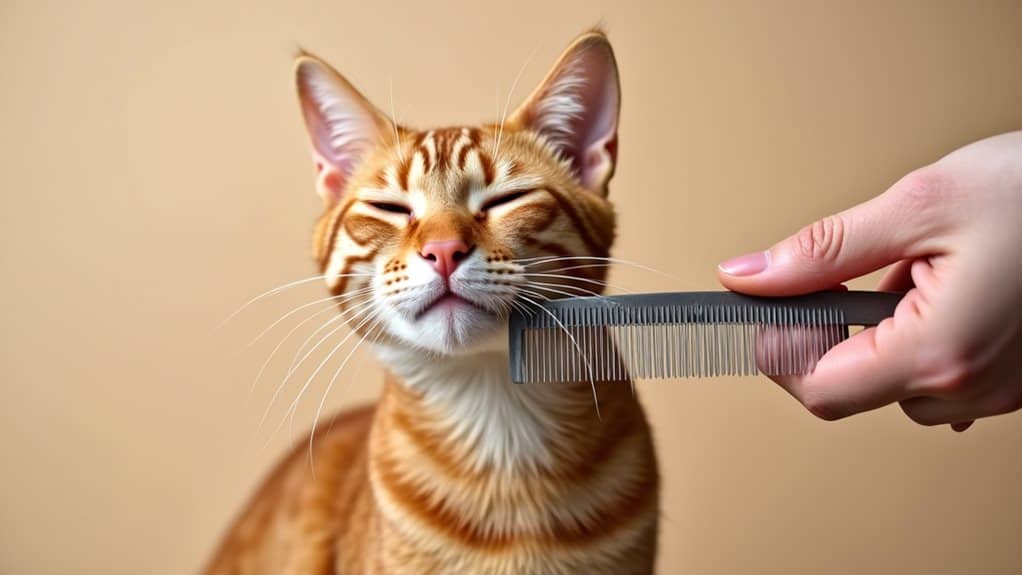
You’ll find that brushing short-haired cats requires fewer tools than their fluffier counterparts, with a rubber brush and fine-toothed comb being your best friends for this job.
Always brush in the direction of your cat’s fur growth, starting from the head and working your way down to prevent discomfort and maximize loose hair removal.
For the most effective grooming session, try to brush your short-haired companion once or twice a week, using gentle, short strokes that’ll leave both your cat’s coat gleaming and your furniture fur-free. Regular grooming helps detect skin issues early, contributing to your cat’s overall health and well-being.
Essential Tools Needed
Grooming your short-haired feline friend requires just a few specialized tools to achieve those sleek, shiny results.
When establishing regular grooming schedules, you’ll notice improved cat behavior and a stronger bond between you two. Most short-haired cats aren’t fans of lengthy sessions, so having the right tools ready makes everything go effortlessly.
Here’s what you’ll need:
- A rubber curry brush or grooming mitt – perfect for removing loose fur while giving a massage your cat will actually enjoy
- Fine-toothed metal comb – catches any tangles before they become problems
- Soft microfiber cloth – great for a final wipe-down that leaves your cat’s coat gleaming
Additionally, regular brushing helps with skin health and hygiene, keeping your cat’s coat in top condition and preventing issues.
Proper Stroke Direction
Now that you have your tools in hand, let’s focus on the technique that’ll make your short-haired cat purr with delight. When brushing your feline friend, always follow the direction of hair growth—never brush against it! This natural stroke technique reduces discomfort and prevents skin irritation.
For short-haired breeds, start at the head and work your way down to the tail using even, gentle strokes. Pay special attention to their back and sides where most shedding occurs.
Remember, even short-haired cats benefit from regular grooming sessions! The ideal grooming frequency for short-haired cats is typically once or twice a week. However, during shedding seasons (spring and fall), you might want to increase sessions to every other day.
Additionally, consistent grooming helps reduce shedding by up to 90%, resulting in a cleaner living space for both you and your cat.
Your cat will thank you with fewer hairballs and a shinier coat!
Preventing and Addressing Matting in Long Coats
Long-haired cats require special attention to prevent painful matting that can lead to skin issues and discomfort. Daily grooming is your best defense in matting prevention, especially for those fluffy Persian or Maine Coon beauties. You’ll want to establish a consistent grooming frequency—at least 3-4 times weekly for most long-haired cats. When you spot early signs of matting, don’t panic! Here’s how to address them:
- Start with your fingers to gently separate minor tangles.
- Use a wide-toothed metal comb for stubborn mats, working from the ends inward.
- Apply a pet-safe detangling spray to make the process easier and less stressful. Regular grooming improves skin condition, leading to maintained coat health and added comfort for your feline friend.
Bathing Strategies: When and How for Different Coat Lengths
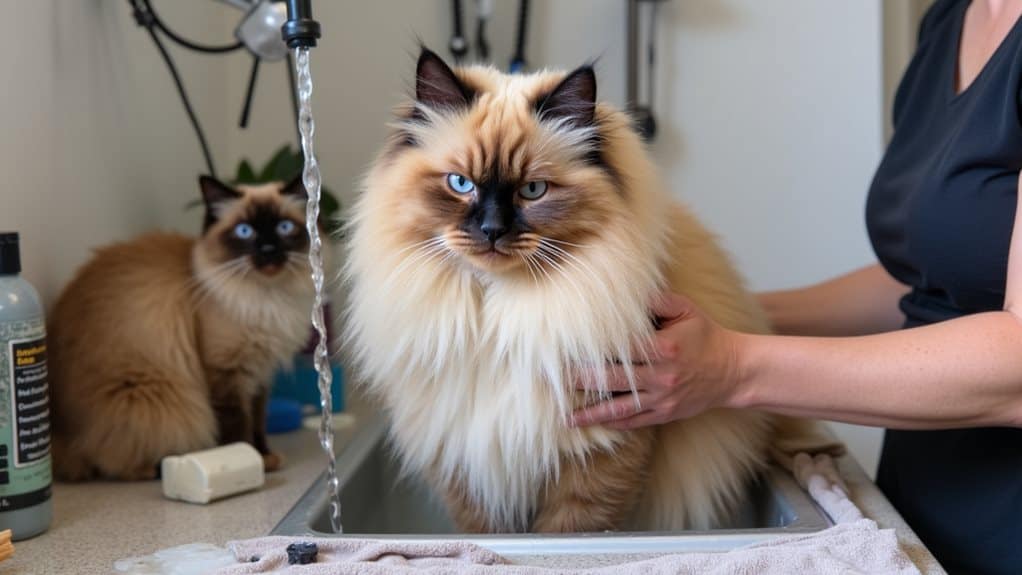
While most cats pride themselves on their self-cleaning abilities, sometimes they need our help with a proper bath. Your bathing frequency depends on your cat’s coat length and lifestyle. Short-haired cats generally need fewer baths than their long-haired counterparts.
| Coat Type | Bathing Frequency | Recommended Shampoo | Special Tips |
|---|---|---|---|
| Short Hair | Every 6-8 weeks | Gentle, tear-free | Quick rinse is enough |
| Medium Hair | Every 4-6 weeks | Moisturizing | Focus on undercoat |
| Long Hair | Every 3-4 weeks | Detangling | Brush before bathing |
| Hairless | Weekly | Specialized, mild | Use warm washcloth |
When bathing your cat, choose shampoo types specifically formulated for felines. Regular human shampoos can strip their skin’s natural oils. Always test water temperature before starting and keep bath time short to minimize stress. Additionally, incorporating omega-3 and omega-6 fatty acids into your cat’s diet can further enhance skin hydration and overall health.
Seasonal Shedding Management for Both Coat Types
Beyond bathing, your feline friend’s grooming needs shift markedly with the seasons. When your cat’s seasonal shedding kicks into high gear, you’ll need a strategic approach to coat maintenance.
Both long and short-haired cats shed their winter coats in spring, then prepare for colder weather in fall with another round of intense shedding.
To manage the fur cyclone in your home:
- Increase brushing frequency to daily sessions during peak shedding seasons (spring and fall)
- Invest in a deshedding tool appropriate for your cat’s specific coat length
- Consider adding omega fatty acid supplements to your cat’s diet to reduce excessive shedding
Regular grooming not only helps in reducing fur accumulation but also promotes a healthy coat; regular grooming will significantly minimize shedding.
You’ll notice considerably less fur on your furniture when you establish a consistent grooming routine that anticipates these seasonal changes.
Recognizing When Professional Grooming Is Necessary
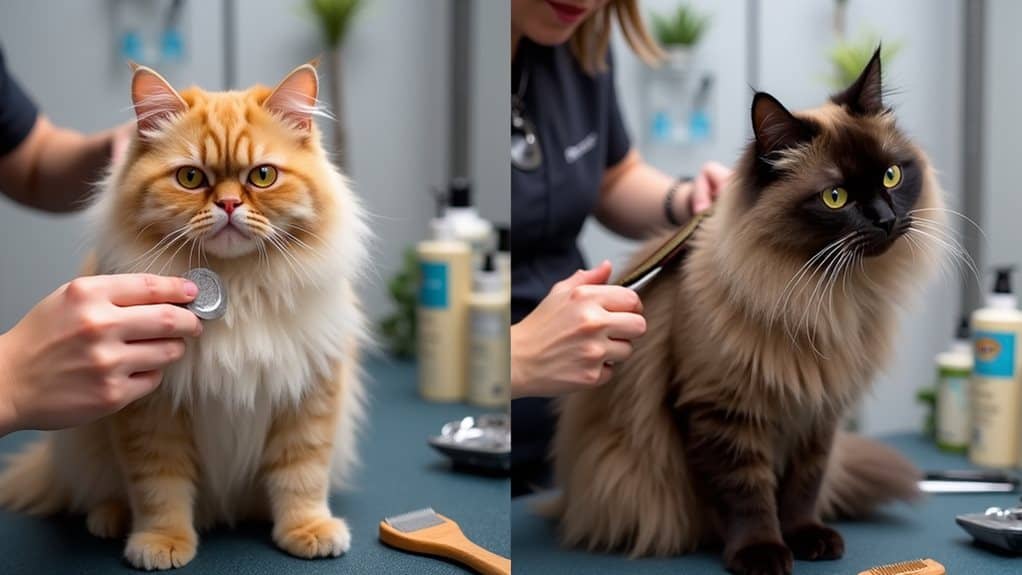
Even the most dedicated cat parents sometimes need to call in the professionals for grooming assistance.
You’ll know it’s time when you notice certain grooming signs: severely matted fur that doesn’t respond to gentle brushing, persistent dandruff despite dietary changes, or fur that’s become excessively oily or clumpy.
Don’t wait until your cat is uncomfortable!
Don’t ignore grooming struggles. Your cat deserves timely care before discomfort becomes distress.
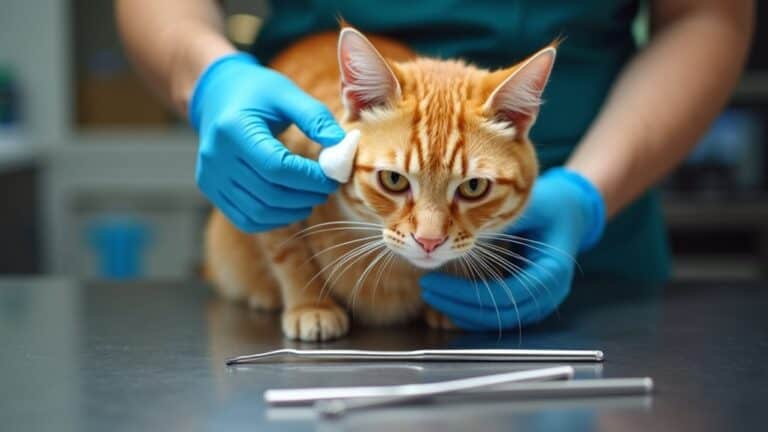
Seek professional advice when your feline friend shows signs of skin irritation, excessive scratching, or becomes aggressive during home grooming sessions.
For long-haired cats especially, professional help might be necessary every few months to prevent painful mats from forming near the skin.
Health Indicators to Monitor During Your Grooming Routine
Regular grooming sessions offer the perfect opportunity to check your cat’s overall health, catching potential problems before they become serious concerns.
While maintaining your cat’s grooming frequency, watch for these important health signals:
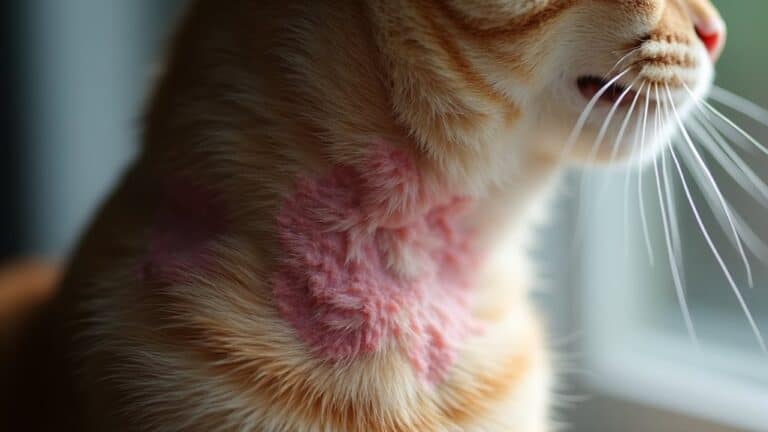
- Skin conditions – Look for redness, bumps, or excessive flaking, which could indicate allergies or parasites affecting your cat’s coat health.
- Unusual lumps – Feel gently along your cat’s body for any new or changing lumps that might need veterinary attention.
- Eye and ear clarity – Check for discharge, redness, or unusual odors that might signal infections.
You’ll soon develop a baseline for what’s “normal” for your furry friend.
This knowledge is invaluable—when you notice changes during routine grooming, you can address health issues promptly!
Frequently Asked Questions
How Does a Cat’s Diet Affect Coat Health and Appearance?
Your cat’s diet directly impacts coat shine and texture. Make sure they’re getting vital coat nutrients like omega fatty acids. You’ll see better results with quality food, but you can add dietary supplements when necessary.
Can I Use Human Haircare Products on My Cat?
No, you shouldn’t use human haircare products on your cat. They’re formulated for different pH levels and contain ingredients that risk cat skin sensitivity. Always choose products specifically designed for feline human product safety.
How Do I Groom a Cat That Becomes Aggressive During Handling?
Start with short, positive grooming sessions using calm techniques like gentle petting. Introduce grooming tools gradually. You’ll need patience, treats for rewards, and possibly a second person’s help for more aggressive cats.
What Age Should Kittens Begin Regular Grooming Routines?
You should start kitten grooming when they’re 4-6 weeks old. Introduce brushing gradually with short, positive sessions. Grooming frequency depends on coat type—short-haired kittens need weekly sessions while long-haired ones require brushing every few days.
How Does Spaying/Neutering Affect a Cat’s Coat and Shedding Patterns?
You’ll be absolutely amazed at the transformation! After spaying/neutering, your cat’s coat often becomes thicker and softer. Spaying effects include reduced seasonal shedding, while neutering benefits include less territorial marking and healthier skin overall.
Final Thoughts
Isn’t it amazing how your feline’s coat determines their entire grooming experience? Whether you’re taming your Maine Coon’s magnificent mane or giving your Siamese a quick brush, you’re not merely keeping them looking good—you’re bonding with them and monitoring their health. Remember, consistency is key! With the right tools and techniques for your cat’s specific coat type, you’ll both enjoy the grooming process and the beautiful results that follow.