The Best Fluffy Pancakes recipe you will fall in love with. Full of tips and tricks to help you make the best pancakes.


Proper cat ear care involves monthly cleaning with vet-approved solutions and cotton balls—never Q-tips. You’ll need to gently hold your cat, apply a few drops of cleaner, massage the base for 20-30 seconds, and wipe away debris after letting them shake their head. Watch for warning signs like excessive scratching, dark discharge, or foul odors which warrant a vet visit. Regular checks help catch problems early, keeping your feline friend comfortable and content.
The Anatomy of Cat Ears: Understanding What’s Normal
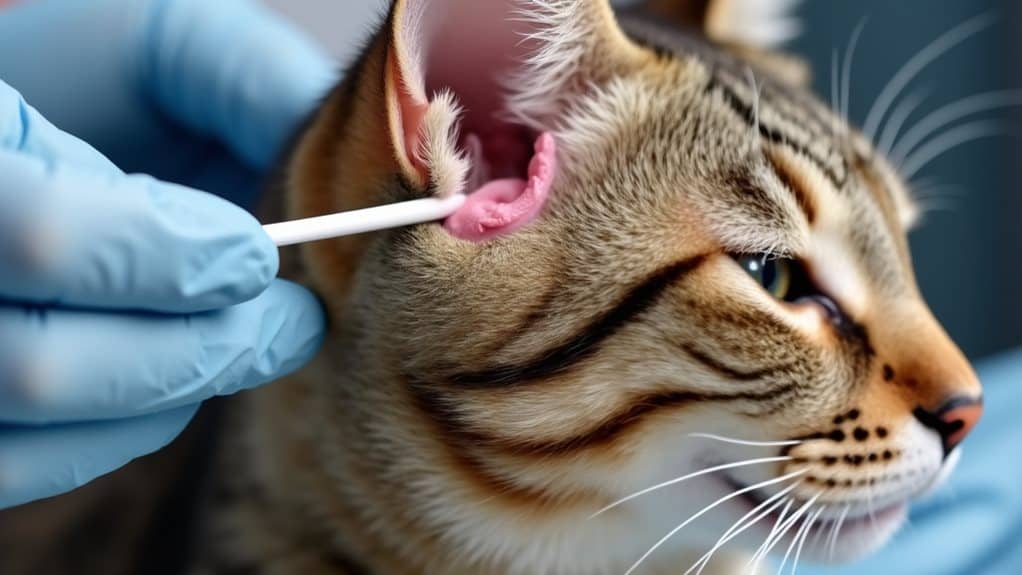
A fascinating marvel of evolution, your cat’s ears are sophisticated instruments designed for more than just hearing. Your feline friend’s ear structure consists of three parts: the outer ear (pinna), middle ear, and inner ear. Those adorable triangular pinnae can rotate independently up to 180 degrees, helping your cat pinpoint sounds with incredible precision.
Normal, healthy cat ears should appear clean, pink, and relatively odor-free. The ear canal should be light pink with minimal wax—typically pale yellow or tan.
Your cat’s sound perception is astonishingly sensitive, detecting frequencies up to 64,000 Hz (compared to your measly 20,000 Hz)! That’s why your kitty might suddenly perk up when you haven’t heard a thing. Regular ear checks are essential for ensuring your cat’s ear health, allowing you to spot potential problems early and keep your furry companion comfortable and healthy.
Common Ear Problems in Cats: What to Watch For
You’ll want to watch for signs of ear mites and infections in your cat, including excessive scratching, dark discharge, or a foul odor coming from the ears.
External trauma, such as cuts, scratches, or swelling around your cat’s ears, shouldn’t be ignored as they can lead to more serious complications.
Regular checking of your feline friend’s ears can help you catch these common problems early, making treatment easier and more effective. Additionally, regular vet check-ups can help identify underlying issues that may be related to ear health.
Ear Mites and Infections
While enjoying perfect health most days, cats can occasionally develop ear problems that require your attention. Two common culprits are ear mites and bacterial infections. You’ll notice your cat scratching excessively or shaking their head when these issues arise. For effective ear mite prevention, regular cleaning and veterinary check-ups are crucial. Regular inspections help identify ear problems early before they escalate.
| Condition | Infection Symptoms | Treatment Approach |
|---|---|---|
| Ear Mites | Dark discharge, intense itching | Prescription medication |
| Bacterial Infection | Yellow/green discharge, redness | Antibiotic drops |
| Yeast Infection | Brown waxy discharge, odor | Antifungal treatment |
| Allergies | Redness, swelling, scratching | Identify trigger, medication |
Don’t try diagnosing these conditions yourself—your vet needs to determine the specific cause. With proper treatment, your furry friend will be back to their playful self in no time!
External Trauma Signs
Beyond infections and mites, cats’ ears can suffer from external trauma that requires immediate attention. Your cat’s ears are delicate and vulnerable to injury during play, fights, or accidents. Watch for obvious trauma signs like torn ear tips, scratches, or unusual ear positioning.
You’ll notice if your cat suddenly becomes head-shy, repeatedly shakes their head, or paws at their ears following an ear injury. Fresh blood, scabbing, or swelling around the ear flap indicates recent trauma.
Some cats may develop hematomas—fluid-filled swellings that feel squishy to the touch—when blood vessels rupture under the skin. Proper wound care techniques are essential for preventing infection and promoting healing in such cases.
Don’t wait to see if these issues resolve on their own. When you spot signs of external ear trauma, contact your vet right away to prevent complications and relieve your cat’s discomfort.
Signs Your Cat Needs Ear Cleaning or Veterinary Attention
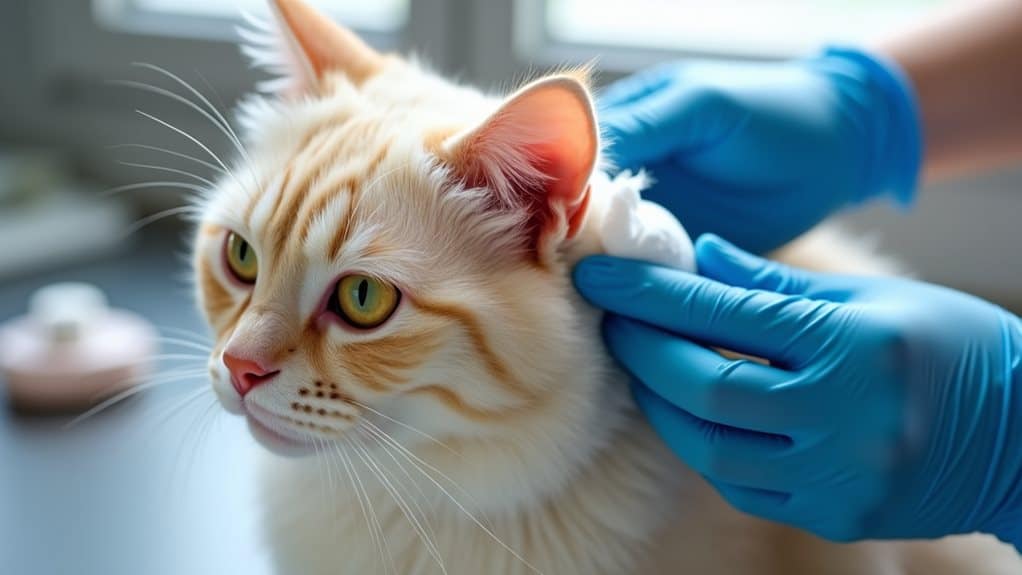
Several telltale signs can alert you to potential ear problems in your feline friend. If you notice your cat repeatedly scratching their ears or shaking their head, it’s time to investigate. Proper ear cleaning techniques can help prevent infections, but knowing when to clean versus when to visit the vet is essential.
Pay attention to your cat’s ear-scratching habits. Frequent pawing or head-shaking warrants closer inspection.
- Strong odor coming from the ears (sweet or yeasty smells often indicate infection)
- Dark discharge or excessive wax buildup
- Redness, swelling, or visible irritation around the ear canal
- Changes in behavior, like increased irritability or signs of discomfort when ears are touched
Don’t wait if you notice these symptoms—early intervention prevents minor issues from becoming serious problems. Additionally, proper veterinary check-ups are crucial for monitoring your cat’s overall health and addressing any underlying concerns that may lead to ear issues.
Essential Supplies for Safe Home Ear Cleaning
Once you’ve identified that your cat needs ear cleaning, gathering the right tools is a key step before you begin.
You’ll need a veterinarian-approved cat ear cleaning solution (never use alcohol or hydrogen peroxide), cotton balls or gauze pads, and treats to reward your furry friend afterward.
Don’t even think about using Q-tips or cotton swabs, as they can push debris deeper or damage your cat’s ear canal—a mistake that could lead to an emergency vet visit!
Having a helper to gently hold your cat can make the process much easier.
Before starting, arrange all your ear cleaning supplies within arm’s reach.
This preparation guarantees you can use safe cleaning techniques without fumbling around while your skeptical kitty contemplates their escape plan. Regular ear cleaning can also contribute to overall health enhancement, preventing potential infections and discomfort for your beloved pet.
Step-by-Step Guide to Properly Cleaning Your Cat’s Ears
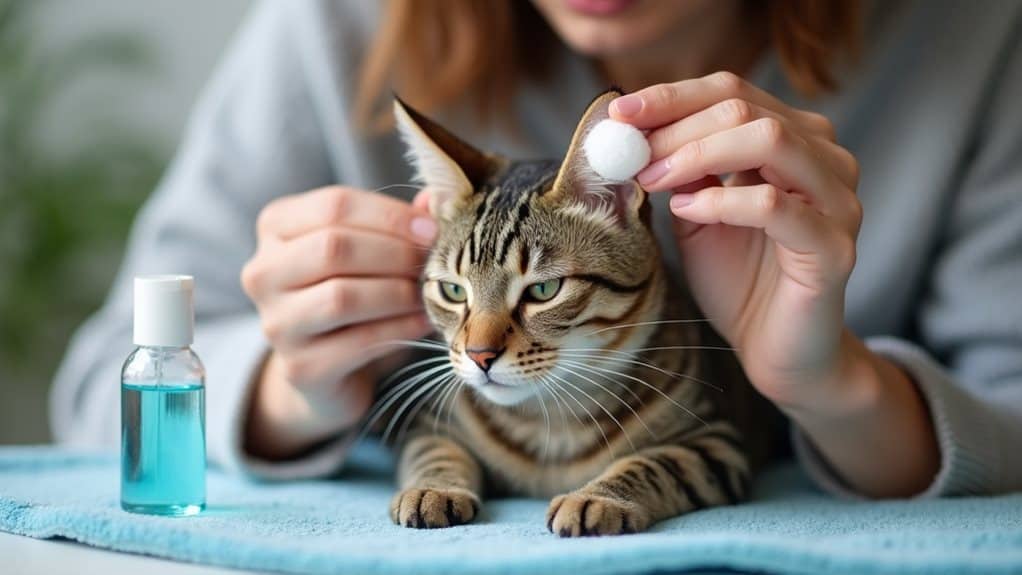
Cleaning your cat’s ears properly involves five simple steps that can make this potentially stressful task much easier for both of you.
Before starting, gather your supplies and choose a time when your kitty is calm. Remember, effective cat ear hygiene prevents infections and keeps your feline friend comfortable.
- Hold your cat gently but securely in your lap, wrapping them in a towel if needed to prevent scratches.
- Apply a few drops of vet-approved cleaner to the ear canal, never pouring directly into the ear.
- Massage the base of the ear for 20-30 seconds to distribute the solution.
- Allow your cat to shake their head, then wipe the outer ear with cotton balls.
These ear cleaning techniques work best when done consistently but sparingly—once monthly is usually sufficient for most cats. Additionally, regular veterinary check-ups can help to ensure overall ear health and detect any potential issues early on.
How Often Should You Clean Your Cat’s Ears?
Unlike daily tasks such as feeding or litter box maintenance, cat ear cleaning doesn’t require frequent attention for most feline companions.
For healthy cats with no history of ear problems, checking and cleaning ears once a month is typically sufficient. You’ll want to establish a regular cat ear hygiene routine that fits naturally into your schedule.
Some cats, especially those with ear mite susceptibility or allergies, might need more frequent cleaning—perhaps every two weeks.
Watch for signs that indicate a need for cleaning: visible dirt, unusual odor, or your cat scratching at their ears excessively.
Remember, over-cleaning can actually irritate the delicate ear canal and disrupt its natural cleaning mechanism. Regular ear checks for dirt or wax buildup can help maintain ear health and identify potential issues early.
When in doubt about cleaning frequency, consult your veterinarian for personalized advice for your particular feline friend.
Breed-Specific Ear Care Considerations
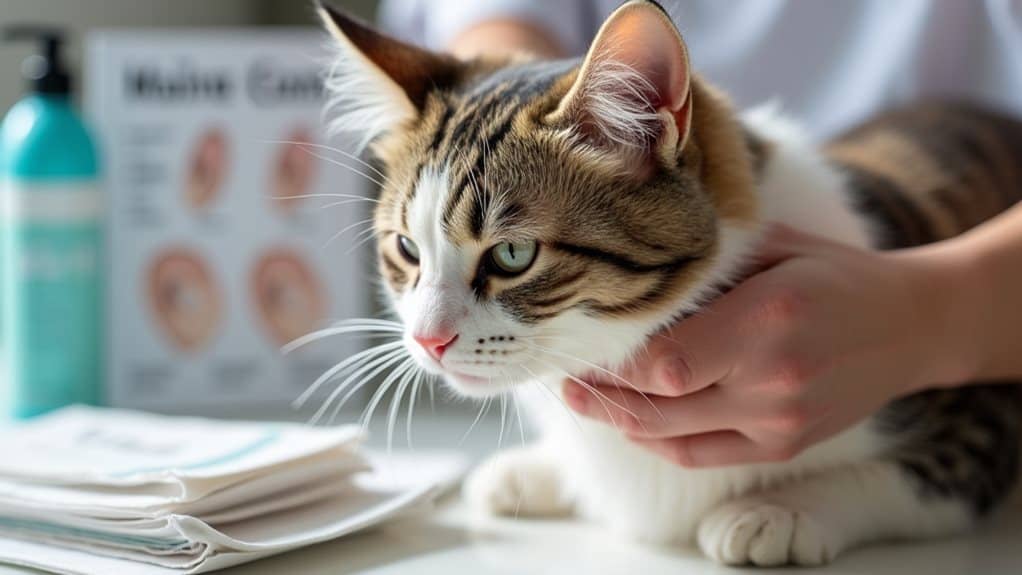
Different cat breeds come with their own unique ear care requirements. Your cat’s ear shape, hair type, and genetic predispositions all play a role in determining how you should approach ear maintenance.
For example, Sphynx care involves more frequent cleaning since these hairless cats lack the protective fur that helps keep debris out of ear canals. Meanwhile, Persian maintenance requires special attention to prevent wax buildup hidden beneath their luxurious fur.
- Scottish Folds need gentle cleaning around their distinctive folded ears to prevent moisture buildup.
- Maine Coons often develop ear tufts that should be carefully trimmed to reduce debris collection.
- Sphynx cats benefit from weekly ear wipes to remove excess oils.
- Persians require regular checks behind ear flaps where matting can occur.
Additionally, understanding the scent marking behavior of your cat can help foster a secure environment that promotes overall well-being.
Don’t assume all cats need identical ear care routines—your furry friend’s breed matters!
Natural Remedies and Preventative Measures for Ear Health
Many cat owners prefer natural approaches to ear maintenance before turning to medical interventions. You’ll find several gentle options that can keep your feline friend’s ears in top condition without harsh chemicals.
Diluted apple cider vinegar, applied with a cotton ball to the outer ear only, can help maintain proper pH levels. Some natural oils, like coconut or olive oil in tiny amounts, may help soften ear wax for easier removal during cleaning sessions.
Herbal solutions containing calendula or chamomile can soothe irritated ears, but always check with your vet before trying these remedies. Regular inspections not only help in detecting ear problems but also ensure timely treatment, leading to better ear health for your cat.
The best preventative measure? Regular inspection! Set a weekly reminder to check your cat’s ears for redness, discharge, or odd smells—catching problems early means simpler solutions later.
When to Seek Professional Help: Recognizing Serious Conditions
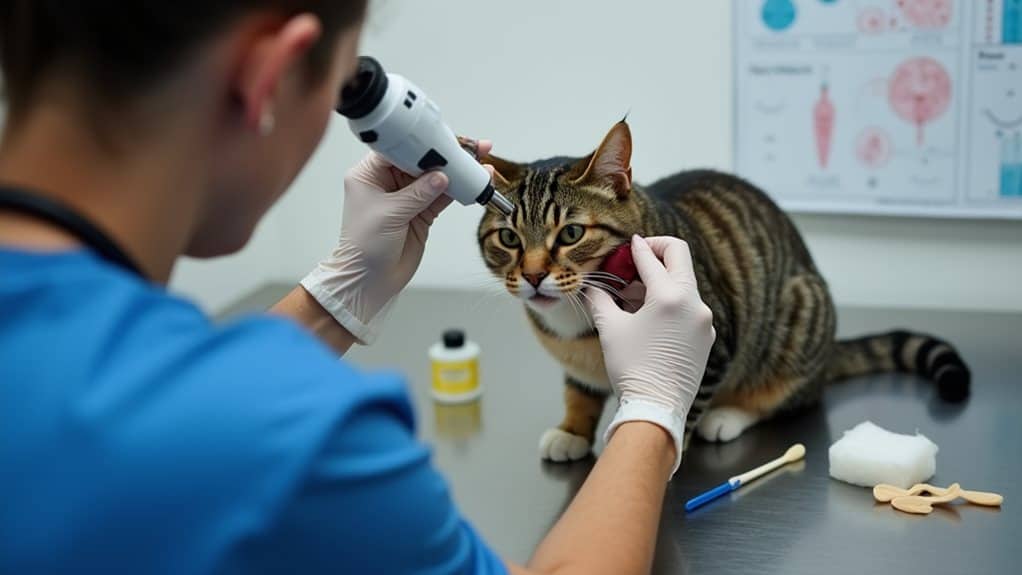
While regular home ear care is important, certain warning signs demand immediate veterinary attention. Your cat’s ear health isn’t something to gamble with, and recognizing when professional help is needed can prevent minor issues from becoming major problems.
- Strong odor coming from the ears, which often indicates an infection requiring medication
- Excessive scratching, head shaking, or pawing at ears that persists for more than a day
- Visible discharge that’s dark brown, yellow, or bloody rather than normal light brown wax
- Swelling, redness, or warmth around the ear area
Don’t hesitate to seek veterinary guidance if you notice these symptoms. Your vet has specialized tools and knowledge to properly diagnose ear conditions that you simply can’t address at home.
When your cat shows ear trouble, professional help isn’t optional—it’s essential for proper diagnosis and treatment.
Trust your instincts—if something seems off, it probably is.
Training Your Cat to Accept Ear Handling and Cleaning
Most cats aren’t naturally enthusiastic about having their ears touched, but with patience and positive reinforcement, you can train your feline friend to tolerate—or even enjoy—ear handling. Start with short sessions during calm moments when your cat is relaxed and receptive.
| Training Stage | What To Do | Reward Type | Duration |
|---|---|---|---|
| Introduction | Gently touch outer ear | Treats, praise | 30 seconds |
| Progression | Touch inner ear flap | Favorite treat | 1 minute |
| Advancement | Brief cotton swab touch | Special food | 2 minutes |
| Maintenance | Quick cleaning motion | Play session | 3 minutes |
Remember that positive reinforcement works wonders! Pair ear handling with treats, petting, or playtime so your cat forms positive associations. Never force the process—if your cat shows stress, back off and try again later.
Frequently Asked Questions
Can I Use Q-Tips/Cotton Swabs to Clean My Cat’s Ears?
No, don’t use Q-tips in your cat’s ears. They can push ear wax deeper or cause injury. Instead, use vet-recommended ear cleaners and cotton balls to safely wipe the outer ear area only.
Do Indoor Cats Need Different Ear Care Than Outdoor Cats?
Ever wonder about your cat’s ear needs? Yes, outdoor cats need more frequent checks due to increased parasite risks and debris from outdoor exposure, while indoor cats with their sheltered lifestyle typically require less intensive ear maintenance.
Can Ear Problems Affect My Cat’s Balance or Hearing?
Yes, ear problems can affect your cat’s balance and hearing. Ear infections often cause balance issues, disorientation, and hearing loss. You’ll notice your cat tilting their head, stumbling, or becoming less responsive to sounds.
Is It Normal for Kittens to Have Dirtier Ears Than Adults?
Yes, kittens often have dirtier ears than adults. Their ear cleaning frequency should be higher as they’re still developing proper kitten ear hygiene habits. You’ll need to monitor and clean them more regularly.
Can I Use Human Ear Cleaning Products on My Cat?
No, you shouldn’t use human ear cleaning products on your cat. They’re too harsh and could damage your cat’s sensitive ears. Always choose products specifically formulated for feline ear hygiene instead.
Final Thoughts
Remember, your attention to your cat’s ears shows how much you care about their overall health. “An ounce of prevention is worth a pound of cure” certainly applies to feline ear care. With regular monitoring, gentle cleaning when needed, and prompt veterinary care for concerning symptoms, you’ll help your furry friend maintain healthy, comfortable ears for years to come. Your cat may not thank you directly, but their purrs of contentment certainly will!